








How Custom CRM Solutions Automate Business Workflows
Discover how custom CRM solutions automate business workflows, enhance efficiency, reduce errors, and drive smarter decisions with real-time insights.
Introduction
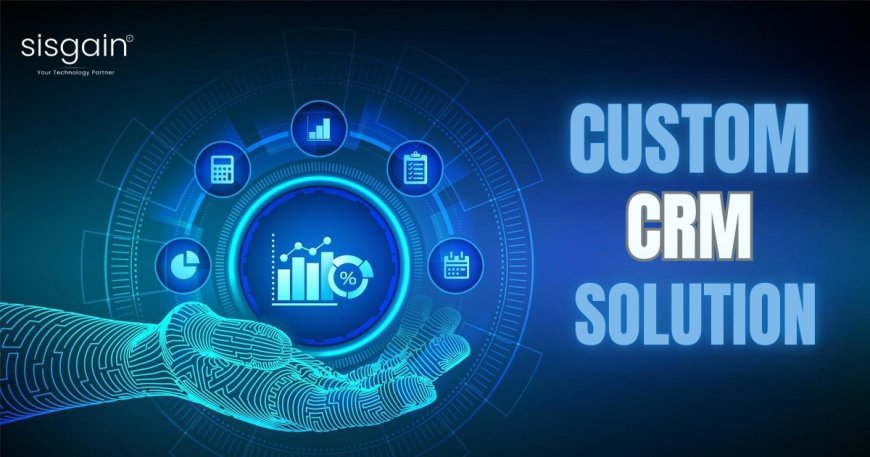
In todays fast-paced digital economy, businesses are under constant pressure to deliver faster services, improve customer experiences, and reduce operational inefficiencies. Manual processes, disconnected systems, and repetitive tasks slow down growth and create data silos that impact decision-making. This is where custom CRM solutions play a transformative role.
Unlike generic CRM platforms, a custom CRM system is built specifically around your business workflows, goals, and industry requirements. It enables companies to automate daily operations, streamline internal processes, and gain complete visibility across departments. From sales and marketing to customer support and project management, CRM automation ensures consistency, accuracy, and scalability.
For IT-driven organizations, especially those using CRM software for IT companies, workflow automation becomes a competitive advantage. This blog explores how custom CRM solutions help businesses automate workflows, improve productivity, and support long-term growth.
Understanding Workflow Automation in CRM
Workflow automation refers to using technology to perform repetitive business tasks automatically based on predefined rules and triggers. In a CRM environment, workflow automation ensures that processes such as lead assignment, follow-ups, approvals, reporting, and notifications occur without manual intervention.
A custom CRM system allows businesses to design workflows that mirror real operational needs rather than forcing teams to adapt to rigid software limitations. This level of customization ensures smoother execution and greater efficiency.
Why Businesses Need Custom CRM Solutions for Automation
1. One-Size-Fits-All CRMs Have Limitations
Off-the-shelf CRM tools often come with fixed workflows that may not align with your business processes. Companies end up adjusting their operations to match the software, resulting in inefficiencies.
With custom CRM solutions, workflows are designed around your existing processes, making automation seamless and intuitive.
2. Growing Businesses Need Scalable Automation
As businesses scale, manual workflows become harder to manage. Custom CRM automation supports growth by handling increasing data, users, and transactions without compromising performance.
Key Ways Custom CRM Solutions Automate Business Workflows
1. Automated Lead Management
One of the most impactful benefits of a custom CRM system is lead automation.
Custom CRM workflows can:
-
Capture leads from websites, emails, ads, and social platforms into a centralized CRM automatically.
-
Automatically assign leads based on location, industry, or priority for faster response.
-
Trigger instant follow-ups through emails or notifications to avoid missed opportunities.
-
Move leads through predefined sales stages with a structured and automated pipeline.
This ensures no opportunity is missed and sales teams focus on closing deals instead of data entry.
2. Sales Process Automation
Sales workflows are often complex and time-sensitive. Custom CRM solutions automate each stage of the sales pipeline by:
-
Sending automated reminders for follow-ups to ensure timely engagement with prospects and prevent missed opportunities.
-
Updating deal status based on customer actions so the pipeline reflects real-time progress without manual updates.
-
Generating quotes and proposals automatically to save time, reduce errors, and speed up the sales cycle.
-
Tracking sales performance in real time through dashboards and reports, providing actionable insights for managers and teams.
For IT firms, CRM software for IT companies can integrate project estimation, client onboarding, and contract approvals into a single automated flow.
3. Marketing Campaign Automation
Custom CRM automation allows marketing teams to run targeted campaigns without manual effort.
Automated CRM workflows can:
-
Segment audiences based on behavior or demographics to target the right prospects with relevant content.
-
Schedule personalized email campaigns for timely and consistent communication.
-
Track engagement and conversions to measure campaign effectiveness.
-
Automatically nurture leads until sales-ready, moving them smoothly through the marketing funnel.
By interlinking marketing automation with sales workflows, businesses achieve better alignment and higher ROI.
4. Customer Support & Ticket Automation
Customer support workflows benefit significantly from automation in a custom CRM system.
Key automated features include:
-
Auto-creation of support tickets for every customer issue, eliminating manual entry.
-
Priority assignment based on issue severity to ensure urgent problems are addressed first.
-
Automated status updates to customers keep them informed throughout the resolution process.
-
Escalation rules for unresolved issues to prevent delays and maintain service quality.
For IT service providers, CRM automation ensures faster resolution times and improved customer satisfaction.
5. Task & Approval Workflow Automation
Manual approvals slow down operations and increase the risk of errors. Custom CRM solutions automate internal workflows such as:
-
Leave and expense approvals are automated to save time and reduce manual errors.
-
Contract and document approvals follow predefined rules, ensuring timely processing and compliance.
-
Project milestone approvals are tracked automatically, keeping projects on schedule.
-
Compliance verification processes are integrated to maintain regulatory standards and reduce risks.
Automated approvals ensure accountability and eliminate unnecessary delays.
6. Project & Resource Management Automation
For organizations delivering digital and IT services, CRM software for IT companies plays a crucial role in project automation.
Custom CRM workflows can:
-
Automatically assign tasks to teams based on roles, skills, or availability.
-
Track project timelines and deliverables to ensure deadlines are met.
-
Monitor resource utilization for optimal efficiency and workload balance.
-
Send alerts for delays or risks to proactively address potential issues before they impact projects.
This creates transparency across departments and improves project delivery efficiency.
7. Reporting and Analytics Automation
Custom CRM systems automate data collection and reporting by:
-
Generating real-time dashboards for instant visibility into business performance.
-
Scheduling automated performance reports to keep teams informed without manual effort.
-
Tracking KPIs across departments to monitor progress and identify bottlenecks.
-
Providing predictive insights using historical data to support smarter, data-driven decision-making.
Automated analytics help leadership make informed decisions without waiting for manual reports.
How Custom CRM Solutions Improve Cross-Department Collaboration
A major advantage of custom CRM solutions is their ability to create seamless collaboration across departments. By centralizing data and interlinking workflows, a custom CRM system ensures that all teams work with real-time, accurate information, improving coordination and operational transparency.
-
Sales and marketing alignment: Sales teams share real-time lead and customer data with marketing, enabling better campaign targeting and improved conversion rates.
-
Faster support resolution: Support teams gain instant access to complete customer histories, allowing them to resolve issues quickly and deliver personalized assistance.
-
Improved management visibility: Management can monitor performance, track KPIs, and evaluate productivity across teams through unified dashboards and reports.
By interlinking workflows across departments, custom CRM automation reduces communication gaps, strengthens accountability, and drives more efficient collaboration throughout the organization.
For a deeper understanding , you can also read how crm development can transfer your customer service strategy .
Benefits of Workflow Automation Using Custom CRM Systems
1. Increased Productivity
Workflow automation reduces manual and repetitive tasks such as data entry, follow-ups, and status updates, allowing employees to focus on strategic, revenue-generating activities that improve efficiency, performance, and overall business output.
2. Reduced Human Errors
Automated workflows minimize the risk of mistakes caused by manual data handling by enforcing predefined rules and validations, ensuring consistent processes, accurate data entry, and reliable outcomes across all departments and business operations.
3. Faster Decision-Making
Real-time data tracking, automated dashboards, and instant reports provide leadership with actionable insights, enabling faster, more informed decisions that improve responsiveness, optimize resources, and support proactive business planning.
4. Enhanced Customer Experience
Automation enables quicker responses, personalized communication, and seamless service delivery by providing teams with complete customer histories, ensuring timely support, consistent interactions, and higher levels of customer satisfaction and loyalty.
5. Scalability & Flexibility
Custom CRM solutions are designed to scale alongside business growth, allowing workflows, integrations, and features to adapt easily to evolving operational needs, market demands, and organizational changes without system limitations.
Why IT Companies Benefit Most from Custom CRM Automation
IT organizations operate in dynamic and highly collaborative environments where workflows span across clients, developers, support teams, and external vendors. Managing these interconnected processes manually often leads to delays, communication gaps, inconsistent service delivery, and limited visibility into operations. A custom CRM system built specifically for IT businesses helps overcome these challenges by centralizing data and automating critical workflows across the organization.
Through automated client onboarding, IT companies can efficiently capture requirements, assign internal teams, initiate contracts, and ensure a smooth transition from sales to project execution. Project lifecycle management automation enables teams to track progress across development stages, manage resources effectively, and maintain transparency for both internal stakeholders and clients.
Custom CRM Solutions vs Standard CRM Automation
A custom CRM system delivers deeper automation and better alignment with business goals.
|
Feature |
Standard CRM |
Custom CRM System |
|
Workflow Flexibility |
Limited |
Fully customizable |
|
Scalability |
Moderate |
High |
|
Industry Fit |
Generic |
Industry-specific |
|
Integration |
Restricted |
API-driven |
|
Automation Depth |
Basic |
Advanced |
Best Practices for Implementing CRM Workflow Automation
-
Clearly map existing workflows to understand current processes and identify inefficiencies.
-
Identify automation opportunities where repetitive or time-consuming tasks can be streamlined.
-
Define rules, triggers, and conditions to ensure workflows run accurately and consistently.
-
Ensure seamless system integration with existing tools and platforms for smooth data flow.
-
Test workflows before full deployment to eliminate errors and optimize performance.
-
Train teams for adoption so employees can effectively use and benefit from CRM automation.
Following these best practices ensures long-term success and a strong return on investment (ROI).
Future of Workflow Automation with Custom CRM Solutions
The future of workflow automation lies in intelligent, data-driven CRM systems. As artificial intelligence, machine learning, and advanced analytics continue to evolve, custom CRM solutions will move beyond basic automation to deliver smarter, predictive capabilities. Businesses will benefit from predictive workflow automation that anticipates actions before they are needed, AI-powered task recommendations that improve team efficiency, and intelligent customer engagement based on real-time behavior and preferences.
Additionally, advanced performance forecasting will help organizations plan resources, identify risks, and optimize outcomes with greater accuracy. Companies that invest in CRM automation today will be well-positioned to scale faster, adapt to market changes, and stay ahead in an increasingly digital business landscape.
Conclusion
Workflow automation is no longer optionalit is a necessity for businesses aiming to stay competitive. Custom CRM solutions empower organizations to automate processes, eliminate inefficiencies, and improve collaboration across teams.
By implementing a custom CRM system, businesses gain complete control over workflows while ensuring scalability, accuracy, and customer satisfaction. For technology-driven organizations, especially those using CRM software for IT companies, automation becomes the foundation for sustainable growth and operational excellence.
Investing in a tailored CRM solution is not just about technologyits about building smarter, faster, and more resilient business processes.