













Why Progressive Web Apps Matter for Cross-Device Compatibility
Progressive Web Apps enable seamless cross-device compatibility by combining web reach with app-like performance, ensuring consistent user experiences across all devices.

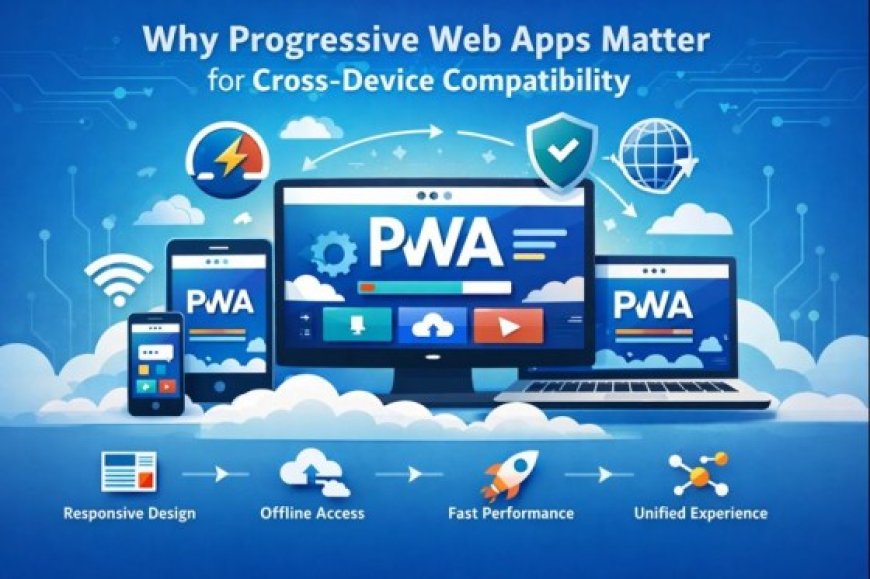
Modern users expect digital experiences that are consistent, fast, and reliable regardless of the device they use. As individuals move fluidly between smartphones, tablets, laptops, and desktops, applications must adapt without compromising performance or usability. This expectation has reshaped how organizations think about application architecture and delivery. Progressive web apps have emerged as a response to these demands by blending the reach of the web with the functionality of native applications. Their relevance continues to grow as businesses seek scalable, device-agnostic solutions that align with evolving user behavior and technological ecosystems.
Defining Progressive Web Apps and Their Core Principles
Progressive web apps, commonly referred to as PWAs, are web applications designed to deliver an app-like experience through modern browser capabilities. They are built using standard web technologies but enhanced with features traditionally associated with native applications.
Key principles that define progressive web apps include:
-
Progressive enhancement ensuring basic functionality for all users
-
Responsive design enabling optimal layouts across screen sizes
-
Connectivity independence allowing operation under varying network conditions
-
App-like interactions that feel smooth and intuitive
-
Discoverability through standard web search mechanisms
These principles work together to ensure that a single application can serve a broad range of devices and usage contexts without fragmenting development efforts.
How Cross-Device Compatibility Shapes Modern User Expectations
Cross-device compatibility is no longer a technical luxury; it is a baseline expectation. Users often begin tasks on one device and complete them on another, expecting continuity and reliability throughout the process. Applications that fail to deliver consistent experiences risk losing engagement and trust.
Several factors influence these expectations:
-
Increased device ownership per user
-
Growth of remote and hybrid work environments
-
Dependence on cloud-based services and real-time data access
-
Preference for frictionless onboarding without repeated installations
Progressive web apps address these factors by offering a unified experience that adjusts dynamically, ensuring users encounter familiar interfaces and behaviors regardless of the device in use.
Technical Features Enabling Consistent Performance Across Devices
The technical foundation of progressive web apps plays a critical role in achieving cross-device compatibility. Service workers, for example, manage background processes such as caching and synchronization, which significantly enhance performance and reliability.
Other important features include:
-
Responsive layouts driven by flexible grids and media queries
-
Adaptive loading strategies that optimize assets for device capabilities
-
Offline functionality that maintains usability during connectivity interruptions
-
Secure contexts supported through modern encryption standards
When implemented correctly, these features allow applications to deliver stable and predictable behavior across diverse hardware configurations and operating systems.
Progressive Web Apps Versus Native and Traditional Web Models
Comparing progressive web apps with native and traditional web applications highlights why they are increasingly favored for cross-device strategies. Native applications typically require separate development efforts for different platforms, increasing complexity and maintenance overhead. Traditional web applications, while accessible, may lack advanced capabilities and performance optimizations.
Progressive web apps occupy a middle ground by combining:
-
The broad reach and accessibility of the web
-
The performance enhancements of native technologies
-
Reduced dependency on platform-specific distribution channels
In this context, organizations evaluating a Progressive Web App Development Service often do so to balance development efficiency with user experience consistency across devices.
Impact on Development Efficiency and Long-Term Maintenance
From a development perspective, progressive web apps offer notable efficiencies. Maintaining a single codebase reduces duplication and simplifies updates, which is particularly valuable when supporting a wide array of devices. Changes can be deployed centrally, ensuring all users benefit immediately without manual updates.
Long-term maintenance advantages include:
-
Streamlined testing processes across devices
-
Lower risk of version fragmentation
-
Simplified compliance with evolving web standards
-
Easier integration with existing web application development workflows
These efficiencies contribute to sustainable application lifecycles while supporting consistent cross-device experiences.
Role of PWAs in Unified Digital Ecosystems
Progressive web apps play a strategic role within broader digital ecosystems. They integrate effectively with cloud services, analytics platforms, and backend systems, enabling cohesive data flows and user insights. This integration supports continuity across touchpoints, which is essential for modern digital strategies.
In ecosystems that also include mobile app development solutions, progressive web apps can complement or extend functionality by offering lightweight access points that do not require full installations. This flexibility allows organizations to tailor experiences based on user context while maintaining a unified technological foundation.
Security, Accessibility, and Performance Considerations
Security and accessibility are critical dimensions of cross-device compatibility. Progressive web apps are delivered over secure connections, protecting data integrity and user privacy. Modern browser APIs also support accessibility standards, ensuring applications remain usable for individuals with diverse needs.
Performance considerations are equally important and include:
-
Optimized asset delivery to reduce load times
-
Intelligent caching to minimize redundant network requests
-
Graceful degradation on lower-powered devices
These elements collectively ensure that applications remain reliable, inclusive, and performant across a wide spectrum of devices and network conditions.
Conclusion
Progressive web apps have become a meaningful response to the growing complexity of multi-device digital engagement. By unifying performance, accessibility, and consistency within a single architectural approach, they address both user expectations and technical challenges. Their ability to adapt seamlessly across devices positions them as a practical and forward-looking solution in an environment where flexibility and reliability are essential. As digital ecosystems continue to expand, the principles underlying this approach will remain central to delivering cohesive and resilient user experiences.






