








Sustainable Software Development and Green Tech for Modern Businesses
Explore how to leverage green technology solutions to make your business operations more sustainable in this blog. Check out for more!
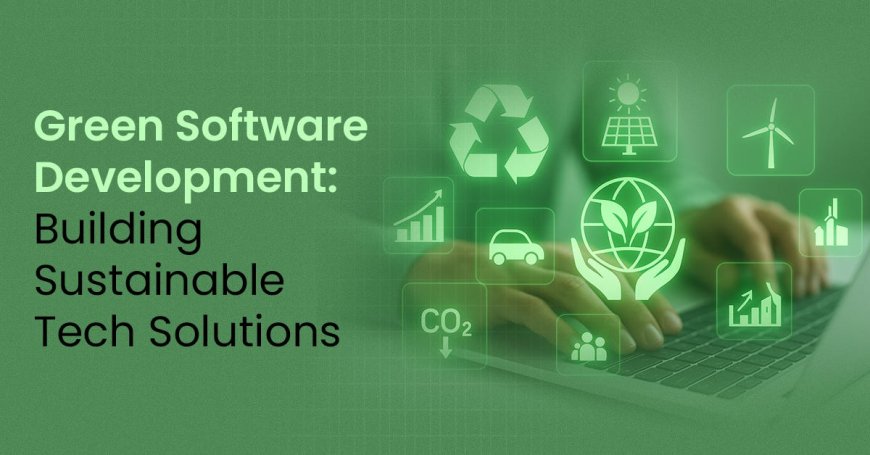
For years, businesses have been dealing with one deeper issue: carbon footprint.
Lots of them have made ambitious sustainability goals, but making them work inside real operations is far harder than most companies expect. With Meta, McKinsey, Shopify, Alphabet, and Stripe committing $925 billion to long-term carbon removal projects, it sends a clear message across the tech world. Sustainability has reached a point where intent alone isnt enough.
Whats becoming obvious is that sustainability fails when businesses lack the systems to support it. Here, the concept of sustainable software development comes in. Not a new software development trend, but rather a practice to translate environmental goals into day-to-day business operations.
Lets discuss!
How is sustainability redefining business operations today?
Sustainability is no longer confined to corporate pledges or annual reports. Its increasingly shaping how businesses operate today.
-
Regulators are asking for more detailed, clearer disclosures.
-
Investors are looking for reliable data they can trust.
-
Customers are taking a closer look at how products are sourced.
Even 69% of employees want their employers to invest in environmental sustainability initiatives, like renewable energy and carbon reduction.
This shift has created new pressure on digital systems, as businesses are now expected to answer sustainability questions with the same accuracy and confidence as they do for financial ones.
And the worst part? Many are discovering that their existing systems werent built for this level of accountability.
Why do traditional systems fall short in ensuring sustainable business operations?
Most of the traditional systems were engineered with efficiency and scale in mind; sustainability was rarely a design priority. When environmental goals are layered on top of these systems, gaps appear quickly.
Common limitations of traditional systems include:
-
Heavy reliance on spreadsheets and manual reconciliations
-
Strong focus on historical reporting instead of ongoing optimization
-
Scattered sustainability data across multiple disconnected tools
-
Limited flexibility to adapt to new regulations or reporting requirements
What does this mean for businesses?
-
Slower, reactive decision making
-
Low confidence in sustainability data
-
Difficulty translating insights into meaningful actions
How can custom software development drive sustainable progress?
Custom software solutions allow businesses to design systems around how their operations actually work. This is the foundation of green technology solutions.
Heres how custom software solutions support sustainability:
1. Energy and resource optimization
-
Real-time monitoring of energy consumption and resource usage
-
Early identification of inefficiencies before emissions and costs rise
-
Data-driven adjustments to operational processes
2. Sustainable supply chain visibility
-
Tracking environmental metrics across suppliers and logistics partners
-
Greater insights into end-to-end carbon footprint
-
Better supplier evaluation and accountability
3. Waste reduction and process efficiency
-
Identifying where waste is generated and why
-
Linking production, inventory, and quality data
-
Supporting more circular and resource-efficient operations
4. Sustainability reporting and ESG data
-
Automated data collection and validation
-
Reduced manual effort and reporting errors
-
Audit-ready sustainability disclosures
Heres a side-by-side comparison between green IT solutions and traditional systems for a better understanding:
|
Area |
Traditional systems |
Sustainable software |
|
Data access |
Fragmented across tools |
Connected and centralized |
|
Adaptability |
Slow to changes |
Built to evolve |
|
Visibility |
Periodic reporting |
Real-time insights |
|
Decision support |
Historical focus |
Continuous optimization |
|
Sustainability fit |
Added as a layer |
Built into the system |
How to turn sustainability into business practices?
Organizations that achieve meaningful outcomes with digital sustainability solutions treat it as an ongoing organizational capability rather than a short-term project or compliance exercise. They recognize that the real impact comes from embedding sustainability into operations instead of relying on isolated tools or static reports.
You can do that too. How? Here are some of the best green software engineering practices:
1. Align sustainability goals with business performance
-
Translate sustainability targets into operational outcomes (e.g., efficiency gains, risk reduction, and cost savings).
-
Embed environmental metrics into executive dashboards and performance KPIs.
-
Position sustainability as a contributor to resilience, profitability, and long-term performance, beyond regulatory adherence.
2. Start with high-impact operational areas
-
Identify operations with significant energy consumption, supply chain complexity, or waste generation.
-
Prioritize areas where improved data visibility can quickly drive measurable outcomes.
-
Leverage early successes to build momentum, credibility, and internal buy-in.
3. Design for seamless system integration
-
Connect sustainability platforms with ERP, supply chain, and analytics systems.
-
Remove redundant data collection and eliminate conflicting reports.
-
Establish a single, trusted source of sustainability data across the organization.
4. Build for flexibility and long-term adaptability
-
Architect systems that can adjust to evolving regulations, frameworks, and reporting standards.
-
Enable new workflows, metrics, and data sources without major system redesigns.
-
Avoid rigid, hard-coded logic that limits future scalability.
5. Establish clear ownership and governance
-
Define accountability for data integrity, reporting accuracy, and system reliability.
-
Clarify responsibilities across IT, operations, finance, and sustainability teams.
-
Ensure sustainability performance is reviewed regularly at the leadership level.
6. Invest in adoption and data trust
-
Educate teams on how sustainability data is gathered, validated, and applied.
-
Deliver insights that support every operational decision directly.
-
Build trust in data accuracy to make teams feel confident acting on insights.
7. Measure impact and commit to continuous improvement
-
Monitor trends in emissions, efficiency, and waste reduction over time.
-
Use insights to uncover new opportunities for optimization and cost savings.
-
Treat sustainability systems as evolving platforms, not a tool for static reporting.
Confused about how to incorporate these practices into your software development? Consider partnering with a custom software development company. With over fifteen years of expertise, Unified Infotech is one such team. They can help you drive sustainability into your operations with custom software solutions.
Whats next for sustainability-driven digital transformation?
As expectations around sustainability continue to intensify, technology systems should evolve to meet these increasing demands. Heres what we can expect from green tech in the future:
1. Software that optimizes sustainability on its own
-
Systems will do more than just show sustainability data; theyll act on it automatically.
-
Software will adjust workloads, energy consumption, and processes in real time.
-
Teams will set the rules, and the software will handle everyday optimization.
-
Sustainability will become a part of normal operations, not a separate initiative.
2. Sustainability built into how software is written
-
Developers will see the energy and carbon impacts as they write the code.
-
Sustainability will become a standard quality check rather than an afterthought.
-
AI tools will flag inefficient code the same way they flag todays performance issues.
-
Environmental impacts are addressed before the software ever reaches production.
3. Full-digital what if models for sustainability
-
AI-driven sustainability software will let companies test sustainability outcomes before making decisions.
-
Environmental impacts will become more predictable and easier to plan for.
-
Teams can simulate changes to suppliers, operations safety, or growth plans.
-
Sustainability planning will start to feel more like financial forecasting.
4. Compliance that updates itself
-
Software will automatically adapt when sustainability rules change.
-
Compliance will become a background process instead of a constant scramble.
-
Teams will no longer constantly need to rebuild reports or logic for new regulations.
-
Businesses will stay audit-ready without compromising on their day-to-day tasks.
5. Infrastructure that follows clean energy
-
Computing workloads will shift to where cleaner energy is available.
-
Data centers and cloud platforms will coordinate to lower overall impact.
-
Systems will run more work when renewable energy is high and scale back when it isnt.
-
Sustainability will become part of infrastructure decisions by default.
Leveraging custom software for sustainable business operations
As weve explored throughout this blog post, today, sustainability is beyond just a trend; its defined by execution. Setting a goal is simple, but delivering measurable results requires flexible, dependable systems built for continuous improvement.
Custom software empowers organizations to embed sustainability into their daily operations, track what truly matters, and improve over time. As expectations continue to evolve, sustainable software development will become pivotal in helping organizations move from intention to lasting impact.
Have more questions on green technology solutions? Drop them below in the comments!