










How the Gojek App Streamlines Transportation and Lifestyle Services
All-in-one Gojek app overview explaining how integrated mobility, delivery, payments, and lifestyle services streamline daily urban transportation and convenience.

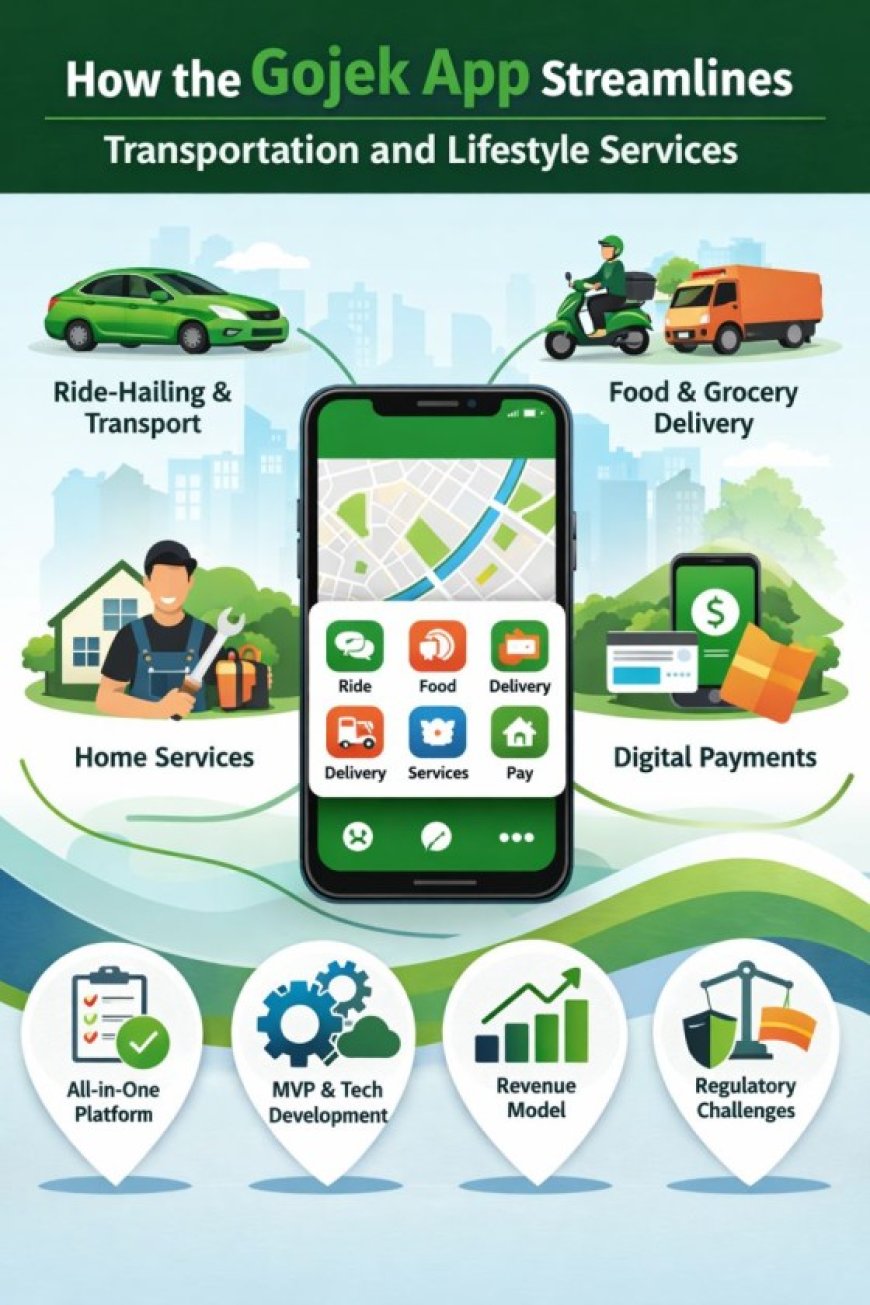
Digital super apps have transformed how urban populations access transportation and everyday services through a single interface. Among these platforms, Gojek stands out for unifying ride hailing, payments, logistics, and lifestyle offerings at scale. This article examines how the ecosystem operates, why it resonates with users, and what structural elements support its efficiency. By analyzing service integration, technology foundations, and economic logic, the discussion provides a clear understanding of how a Gojek clone concept streamlines complex urban needs across modern metropolitan environments.
Evolution of Super Apps and the Rise of Integrated Mobility Services
The emergence of super apps reflects a broader shift in consumer expectations toward convenience, speed, and consolidation. Rather than switching between multiple applications, users increasingly prefer a single digital environment capable of addressing diverse needs. This evolution was accelerated by rapid smartphone adoption, reliable mobile internet, and the normalization of digital payments.
In densely populated cities, fragmented service delivery often creates inefficiencies. Transportation, food ordering, courier services, and bill payments traditionally operated in isolation. Super apps addressed this fragmentation by aggregating services under one account, one wallet, and one user experience. The result is reduced friction for consumers and improved utilization of service providers.
Several macro trends fueled this growth:
-
Urban congestion increased demand for flexible mobility options
-
Time scarcity made multi purpose platforms more attractive
-
Trust in digital payments enabled cross service transactions
-
Data analytics allowed platforms to personalize experiences
Within this environment, platforms modeled on a Gojek clone architecture demonstrated how integrated mobility could scale rapidly while maintaining operational coherence.
How a Single Platform Simplifies Urban Transportation Needs Today
Urban transportation involves more than point to point travel. Commuters require reliability, transparency, and adaptability across different scenarios. A unified platform simplifies these requirements by offering multiple transport modes within one interface, such as bike rides, car rides, and shared options.
This consolidation produces tangible benefits. Users can compare options based on price, estimated arrival time, and availability without leaving the application. For drivers and fleet operators, demand aggregation improves ride frequency and income stability.
Key simplification mechanisms include:
-
Centralized booking and payment processes
-
Real time location tracking and route optimization
-
Dynamic pricing aligned with demand patterns
-
Integrated customer support across services
By removing the need to manage separate accounts or payment methods, the platform reduces cognitive load for users. This design philosophy has become a benchmark for modern urban mobility systems seeking efficiency and scale.
Lifestyle Services Expansion Beyond Rides and Daily Commutes
Transportation often serves as the entry point, but long term engagement depends on lifestyle relevance. Expanding into everyday services transforms a mobility app into a daily utility. Food delivery, grocery shopping, home services, and digital payments extend the platforms value well beyond commuting hours.
This expansion relies on understanding habitual user behavior. For example, a commuter who books a ride in the morning may order lunch during work hours and request a courier service in the evening. Housing these interactions within one ecosystem encourages repeat usage.
Common lifestyle integrations include:
-
Food and grocery delivery from local vendors
-
On demand home maintenance and cleaning
-
Digital wallet services for peer payments
-
Subscription based offerings for frequent users
The strategic advantage lies in cross service data. Insights from one activity inform recommendations in another, creating a cohesive and personalized experience that strengthens user loyalty.
Technology Architecture That Enables Seamless Multi Service Delivery
Behind the user interface lies a complex technological foundation designed for flexibility and resilience. A modular architecture allows new services to be added without disrupting existing operations. This approach is essential when scaling a platform inspired by a Gojek clone framework.
Core architectural components typically include microservices, application programming interfaces, and cloud based infrastructure. Each service operates independently but communicates through standardized interfaces. This separation improves reliability and simplifies maintenance.
Critical technology enablers include:
-
Cloud infrastructure for elastic scalability
-
Microservices for independent service deployment
-
Real time data processing for location and pricing
-
Secure payment gateways and identity management
During early stages, many organizations rely on MVP app development services to validate assumptions and test integrations. This phased approach minimizes risk while ensuring the core architecture can support future expansion.
User Experience Design Principles Driving High Adoption Rates
A broad service portfolio only succeeds if users can navigate it intuitively. User experience design plays a decisive role in adoption and retention. Clear workflows, consistent visual language, and minimal steps are essential for reducing friction.
Design principles emphasize familiarity and predictability. Whether booking a ride or ordering food, users encounter similar confirmation flows and payment screens. This consistency builds confidence and reduces learning curves.
Effective experience design often focuses on:
-
Simplified onboarding with minimal data entry
-
Context aware recommendations based on location and time
-
Transparent pricing and clear status updates
-
Accessible support channels within the app
By prioritizing usability alongside functionality, platforms ensure that service diversity enhances rather than complicates the overall experience.
Operational Economics and Monetization Across Diverse Services
Sustaining a multi service platform requires a balanced economic model. Revenue streams typically vary by service type, with commissions, service fees, and value added offerings contributing to overall profitability. Understanding these dynamics is essential for long term viability.
Operational costs also differ significantly. For example, logistics and food delivery involve higher coordination expenses compared to digital services. Evaluating delivery app development cost early helps align technical investment with realistic revenue expectations.
Common monetization components include:
-
Commission fees from service providers
-
Dynamic pricing during peak demand periods
-
Advertising and featured listings
-
Subscription plans for frequent users
When combined strategically, these elements form a gojek like app business revenue model that balances affordability for users with sustainable margins for the platform.
Scalability Challenges and Regulatory Considerations in Markets
Scaling across cities and regions introduces complexity beyond technology. Regulatory frameworks, labor laws, and transportation policies vary widely. Platforms must adapt operations while maintaining a consistent user experience.
Regulatory challenges often involve driver classification, fare controls, and data privacy requirements. Proactive engagement with local authorities and transparent policies can mitigate operational disruptions.
Scalability challenges commonly include:
-
Maintaining service quality during rapid expansion
-
Adapting to local cultural and regulatory norms
-
Ensuring data security across jurisdictions
-
Supporting increasing transaction volumes
Addressing these factors requires coordinated governance, localized operations, and robust compliance mechanisms.
Future Outlook for Integrated Mobility and On Demand Platforms
The future of integrated platforms points toward deeper personalization and broader service ecosystems. Advances in artificial intelligence and predictive analytics will further refine recommendations and demand forecasting. Sustainability considerations are also shaping service design, with increased emphasis on electric vehicles and shared mobility.
As competition intensifies, differentiation will depend on execution rather than concept alone. Platforms modeled on a Gojek clone approach are likely to explore partnerships in healthcare, education, and financial services to remain relevant.
Long term success will hinge on balancing innovation with reliability. Platforms that continue to simplify daily life while respecting regulatory and social responsibilities will define the next phase of urban digital infrastructure.
Conclusion
Integrated service platforms demonstrate how thoughtful design, robust technology, and economic alignment can simplify complex urban routines. By unifying mobility, daily services, and digital transactions, these ecosystems reduce friction and enhance convenience for millions of users. Their evolution reflects broader shifts in consumer behavior, infrastructure capabilities, and regulatory landscapes. As cities grow and digital expectations rise, such platforms will remain central to shaping efficient, user centered urban living experiences.