









How Document-to-Audio Technology Is Changing the Way Businesses Consume Information
Discover how document-to-audio technology helps businesses reduce information overload, improve content consumption, and boost productivity.
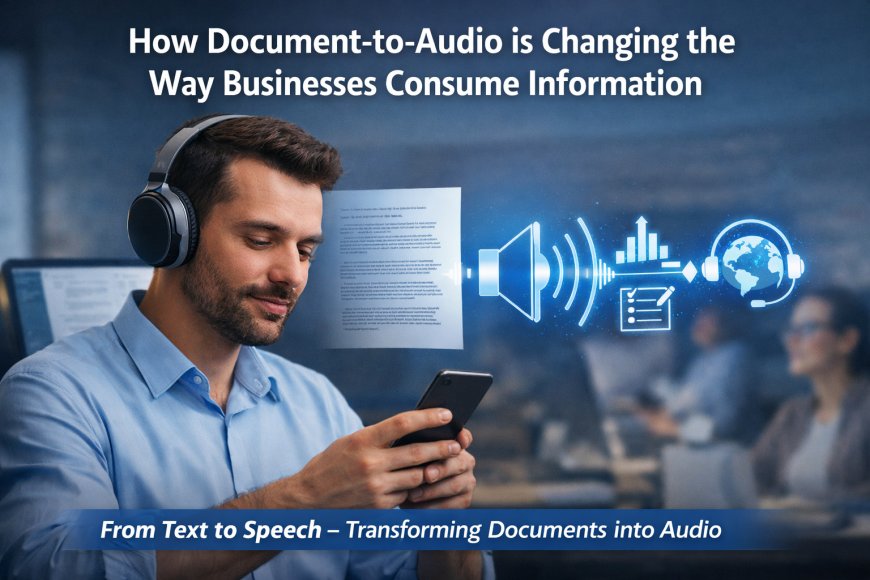
In todays fast-paced digital environment, businesses are producing more written content than ever before. Reports, emails, policy documents, presentations, training manuals, and internal updates are created daily. While information availability has increased, actual content consumption has dropped. Employees are overloaded, attention spans are shrinking, and long documents often remain unread.
This is where Document-to-Audio technology is emerging as a powerful solution. By converting written content into natural-sounding audio, businesses are transforming how information is consumed, retained, and shared.
The Problem With Text-Heavy Communication
Traditional business communication relies heavily on text. However, this approach has several limitations:
-
Employees dont always have time to read long documents
-
Important updates get buried in inboxes
-
PDFs and reports are rarely revisited
-
Learning fatigue reduces knowledge retention
According to workplace productivity studies, most professionals skim documents instead of reading them thoroughly. This leads to missed information, miscommunication, and reduced efficiency.
Businesses need a format that fits into modern work habits and audio does exactly that.
What Is Document-to-Audio Technology?
Document-to-Audio technology uses AI-powered text-to-speech systems to convert written documents into spoken audio. These systems can handle various formats such as PDFs, Word files, web pages, and internal documents.
Unlike traditional robotic voice tools, modern platforms offer:
-
Natural, human-like narration
-
Multiple voice styles and accents
-
Adjustable playback speed
-
High accuracy with technical and professional content
This allows businesses to turn static documents into on-demand audio briefings.
Why Audio Fits Modern Workflows
Audio content aligns perfectly with how professionals work today. Employees can listen while:
-
Commuting
-
Exercising
-
Performing repetitive tasks
-
Multitasking at work
Instead of blocking time to read, information can be consumed passively yet effectively. This significantly improves accessibility and engagement.
Key Benefits of Document-to-Audio for Businesses
1. Higher Content Consumption
Audio removes the friction of reading long documents. Employees are more likely to listen to a 10-minute briefing than read a 20-page PDF. This ensures that important information actually reaches its audience.
2. Improved Knowledge Retention
Studies show that many people retain information better through listening. Audio allows for tone, emphasis, and pacing, which enhances understanding compared to plain text.
3. Accessibility and Inclusivity
Document-to-Audio tools make content accessible for:
-
Visually impaired users
-
Employees with reading difficulties
-
Multilingual teams
Audio ensures that information is inclusive and universally usable.
4. Time Efficiency
Listening to audio often takes less time than reading. Employees can consume updates without interrupting their workflow, saving valuable working hours.
5. Consistent Communication
When documents are converted into standardized audio briefings, messaging stays consistent across teams, departments, and locations.
Common Business Use Cases
Internal Communication
Companies use Document-to-Audio tools for internal announcements, policy updates, leadership messages, and company-wide briefings. This ensures everyone receives the same message in a clear and engaging format.
Training and Onboarding
Training manuals and onboarding documents can be transformed into audio learning modules. New employees can learn faster without being overwhelmed by large amounts of text.
Sales and Marketing Teams
Sales scripts, product documentation, and market updates can be delivered as audio briefings, helping teams stay informed even while on the move.
Compliance and Policy Updates
Compliance documents are often long and complex. Audio versions make it easier for employees to understand rules, regulations, and company policies.
Why Enterprises Are Adopting Audio-First Strategies
Large organizations are increasingly shifting toward audio-first communication. The reasons are simple:
-
Distributed and remote teams
-
Reduced meeting fatigue
-
Need for faster information delivery
-
Global workforce with diverse language needs
Audio content scales easily and fits seamlessly into enterprise workflows.
What to Look for in a Document-to-Audio Platform
Not all tools are created equal. Businesses should look for platforms that offer:
-
Enterprise-grade security
-
Support for multiple document formats
-
High-quality, natural voice output
-
Easy sharing and playback options
-
Scalability for large teams
A reliable platform ensures that audio communication becomes a long-term asset, not a temporary experiment.
The Future of Business Communication Is Audio
As workplaces continue to evolve, the way we consume information must evolve too. Document-to-Audio technology is not just a convenience its a necessity for modern businesses.
By turning written content into engaging audio, organizations can reduce information overload, improve understanding, and ensure that critical messages are actually heard.
Audio is no longer limited to podcasts and entertainment. It is becoming a core part of how businesses communicate, learn, and grow.
Final Thoughts
Document-to-Audio tools represent a shift toward smarter, more human-centered communication. Businesses that adopt this approach early gain a clear advantage better engagement, better retention, and better productivity.
As information continues to grow, the companies that succeed will be the ones that make it easiest to consume.