









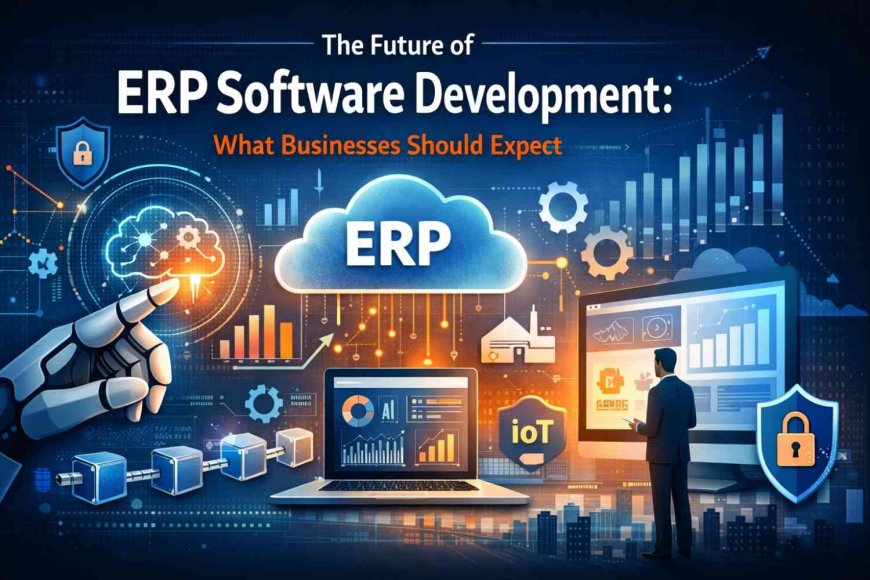
Future of ERP Software Development: What Businesses Should Expect
The future of ERP software development, key trends shaping modern enterprises, and what businesses should expect as ERP systems evolve.
Introduction
Enterprise Resource Planning software has come a long wayand no, were not just talking about prettier dashboards or fewer spreadsheets (though those wins still matter). Weve watched ERP systems evolve from rigid, back-office tools into flexible business engines that quietly run entire organizations. A few years ago, a client casually told us their ERP was just for finance. Fast forward to today, its powering operations, customer insights, and decision-making across departments. Funny how that happens.
The future of ERP software development isnt about incremental upgradesits about rethinking how businesses operate, scale, and compete. So lets talk about whats coming nextand what businesses should realistically expect.
ERP Is Becoming SmarterThanks to AI & Automation
ERP systems are no longer just storing datatheyre learning from it. Artificial intelligence and automation are rapidly transforming ERP platforms into proactive systems that anticipate needs instead of reacting to problems. Were seeing ERPs predict demand, flag anomalies before they escalate, and automate workflows that once consumed entire afternoons. (Yes, approvals can finally move without endless email chains.)
From finance to supply chain management, AI-powered ERP tools reduce manual effort while improving accuracy. The real shift, though, is mindsetERP is becoming a decision partner, not a digital filing cabinet. And once businesses experience that level of intelligence, theres rarely a desire to go back.
Cloud-Native ERP Will Be the Default
On-premise ERP isnt disappearing overnightbut its no longer the first choice. Cloud-native ERP systems are quickly becoming the standard, and for good reason. They offer scalability, real-time access, and cost flexibility that traditional setups struggle to match. Weve seen businesses scale operations without worrying about infrastructureor weekend server emergencies.
Working with a modern erp software development company often means designing cloud-first solutions that adapt as businesses grow. Add remote work into the mix, and cloud ERP stops being a nice-to-have and becomes essential. The future points clearly toward systems that are accessible anytime, anywherewithout the operational headaches.
Modular & Composable ERP Architectures
The era of one massive ERP system doing everythingoften poorlyis fading fast. Todays businesses want modular, composable ERP architectures that let them choose exactly what they need (and skip what they dont). Weve seen firsthand how microservices and APIs allow companies to add or replace features without disrupting the entire system.
This approach brings flexibility, faster innovation, and better cost control. Instead of paying for unused modules, businesses invest in tools that solve real problems. Its practical, efficient, and refreshingly sensible. And honestly, who wouldnt prefer building an ERP system like LEGO blocks rather than pouring one giant concrete slab?
Industry-Specific ERP Solutions Will Dominate
Generic ERP solutions can only go so far. Increasingly, businesses are turning toward industry-specific ERP systems designed around their unique workflows and compliance needs. Manufacturing, healthcare, logistics, and retail all operate differently and ERP software is finally reflecting that reality.
Weve observed smoother implementations and faster adoption when systems are tailored to industry processes rather than forced to adapt later. Employees understand them better, training time drops, and ROI improves. Its less about customization for the sake of itand more about relevance. In the future, ERP systems wont just fit businesses; theyll feel like they were built specifically for them.
User Experience Will Finally Matter (Yes, Really)
For years, ERP usability was lets say an acquired taste. Thats changing. Modern ERP systems are prioritizing user experience, and not a moment too soon. Clean interfaces, role-based dashboards, and mobile-friendly designs are becoming standard expectations.
Weve seen projects succeed or fail based on one simple factorwhether people actually enjoy using the system. (Training manuals no one reads are rarely a good sign.) Intuitive ERP design improves adoption, reduces errors, and makes data accessible to non-technical users. The future of ERP isnt just powerfulits usable. And thats a win everyone can appreciate.
Data Security, Compliance & Governance Take Center Stage
As ERP systems centralize more business-critical data, security and compliance naturally move to the forefront. Businesses are now prioritizing ERP platforms with robust access controls, encryption, and compliance readiness. Regulations arent getting simpler, and neither are customer expectations around data protection.
A reliable erp softwareunderstands that security cant be bolted on laterit has to be embedded from day one. Weve seen organizations gain trust and operational confidence simply by tightening governance within their ERP systems. In the future, strong data security wont be a differentiatoritll be the baseline requirement for doing business responsibly.
ERP + Emerging Tech: IoT, Blockchain & Analytics
ERP systems are increasingly becoming hubs for emerging technologies. IoT devices feed real-time data into ERP platforms, improving asset tracking and inventory visibility. Blockchain adds transparency and traceability, especially in supply chains. Advanced analytics turn raw data into actionable insights.
Weve watched businesses move from reactive reporting to real-time decision-making almost overnight. The key takeaway? ERP is no longer isolatedits connected, intelligent, and deeply integrated with the broader tech ecosystem. As these technologies mature, ERP systems will continue to evolve from operational tools into strategic command centers.
What This Means for Businesses Moving Forward
The future of ERP software development is less about softwareand more about strategy. Businesses that treat ERP as a long-term investment tend to adapt faster and scale smarter. Weve noticed that organizations waiting one more year often end up rushing later, at higher cost.
Forward-thinking companies are planning ERP roadmaps that align with growth, technology shifts, and workforce needs. The focus is moving from replacement cycles to continuous evolution. In short, ERP decisions made today will shape operational resilience tomorrow. And those who plan ahead usually thank themselves later.
Conclusion: Planning for an ERP-Driven Future
ERP software is no longer just a system you installits a platform you grow with. Weve seen businesses thrive when their ERP evolves alongside their strategy, not behind it. The future promises smarter systems, better experiences, and deeper integration with emerging technologies.
The real question isnt whether ERP will change its whether businesses are ready to change with it. Those who invest thoughtfully, plan proactively, and choose flexibility over quick fixes will be best positioned for whats ahead. And from where we stand, that future looks both challengingand full of opportunity.
FAQs
What is the future of ERP software development?
The future lies in cloud-native, AI-driven, modular ERP systems that adapt to business needs and support real-time decision-making.
How does AI improve ERP systems?
AI enhances forecasting, automates workflows, detects anomalies, and provides predictive insights that improve efficiency and accuracy.
Is cloud ERP secure for enterprises?
Yesmodern cloud ERP platforms offer strong security, compliance certifications, and advanced access controls when implemented correctly.
How long does ERP implementation usually take?
Implementation timelines vary, but modular and industry-specific ERP solutions significantly reduce deployment time.
How should businesses choose the right ERP partner?
Look for experience, scalability, security expertise, and the ability to tailor solutions to your industry and growth goals.