










Complete Guide on Bank Exams In 2026 for Aspirants
Complete guide to bank exams in 2026 covering bank exam syllabus, bank exam pattern, eligibility, preparation tips, and smart strategies for aspirants.
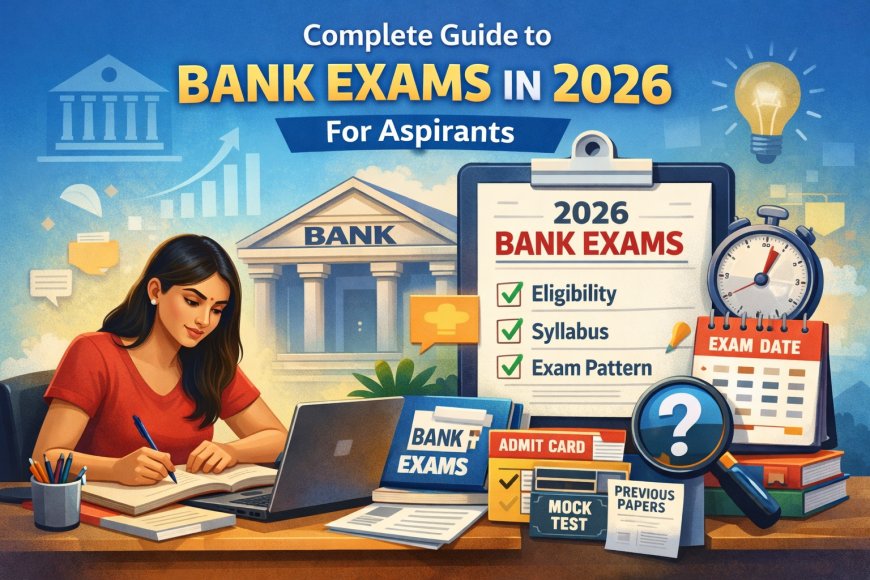
Banking exams remain one of the most popular career choices for graduates in India due to job security, growth opportunities, and respectable salaries. Every year, lakhs of candidates appear for various banking exams conducted by national-level bodies. As competition continues to rise, bank exams in 2026 will demand smarter preparation, better planning, and a clear understanding of exam requirements. This complete guide will help aspirants know what to expect and how to prepare effectively.
Overview of Major Bank Exams in 2026
In 2026, several important banking exams are expected to be conducted for recruitment to clerical and officer-level posts. These include exams for Probationary Officers (PO), Clerks, Specialist Officers (SO), and Assistant posts. Major public sector banks, regional rural banks, and regulatory bodies release notifications annually, attracting candidates from all streams.
Since the level of competition is high, aspirants must start early and stay updated with notifications related to bank exams in 2026 to avoid missing important deadlines.
Bank Exam Eligibility: What Aspirants Must Know
Understanding bank exam eligibility is the first step before starting preparation. Although eligibility criteria may slightly vary depending on the exam and conducting body, the general requirements remain similar.
Most banking exams require candidates to have:
-
A graduation degree in any discipline from a recognized university
-
Minimum age usually between 20 to 30 years (age relaxation for reserved categories)
-
Nationality as specified in the official notification
Some specialized posts may require specific educational qualifications. Aspirants should carefully read the eligibility conditions before applying, as failing to meet bank exam eligibility criteria can lead to disqualification at later stages.
Bank Exam Pattern: Structure of the Examination
A clear understanding of the bank exam pattern helps aspirants plan their preparation more effectively. Most banking exams are conducted in multiple stages, generally including Preliminary and Main examinations, followed by an interview or skill test for certain posts.
The bank exam pattern usually consists of objective-type questions covering sections such as:
-
Reasoning Ability
-
Quantitative Aptitude
-
English Language
-
General Awareness (Banking & Current Affairs)
-
Computer Awareness (in some exams)
Each section has a fixed time limit, making time management a crucial factor. Negative marking is also applicable in most exams, so accuracy is as important as speed.
Bank Exam Syllabus: Key Subjects to Focus On
The bank exam syllabus is vast but well-defined. Aspirants who understand the syllabus clearly can streamline their preparation and avoid unnecessary topics.
The common bank exam syllabus includes:
-
Reasoning Ability: Puzzles, seating arrangement, syllogism, inequality, coding-decoding
-
Quantitative Aptitude: Simplification, data interpretation, arithmetic topics like profit & loss, time & work
-
English Language: Reading comprehension, grammar, vocabulary, sentence correction
-
General Awareness: Banking awareness, financial news, current affairs
-
Computer Awareness: Basics of computers, internet, software, and shortcuts
Focusing on the latest bank exam syllabus helps aspirants stay aligned with the actual exam level and pattern.
Preparation Strategy for Bank Exams in 2026
To crack bank exams in 2026, aspirants must follow a disciplined and realistic preparation strategy. Start by understanding the syllabus and exam pattern thoroughly. Create a daily study plan that covers all sections equally and allows time for revision.
Regular practice through mock tests and previous year question papers is essential. Mock tests help candidates analyze their strengths and weaknesses while improving speed and accuracy. Revising current affairs daily and maintaining short notes can significantly boost performance in the General Awareness section.
Consistency, rather than long study hours, plays a key role in success.
Importance of Mock Tests and Previous Year Papers
This pillar can focus on why mock tests are crucial for understanding the bank exam pattern, improving time management, identifying weak areas, and gaining real exam confidence. You can also highlight how previous year papers help decode trends in the bank exam syllabus.
Time Management and Revision Strategy for Bank Exams
This pillar can explain how aspirants should divide time across subjects, balance accuracy with speed, plan weekly and monthly revisions, and avoid burnout while preparing for bank exams in 2026.
If you want, I can also:
-
Add sub-headings under these pillars
-
Rewrite them in a more SEO-optimized way
-
Adjust them to a SmartKeeda-style structure
Common Mistakes to Avoid
Many aspirants fail despite hard work due to common mistakes such as:
-
Ignoring the bank exam pattern and time limits
-
Studying without referring to the updated bank exam syllabus
-
Delaying mock test practice
-
Not revising regularly
Avoiding these mistakes and following a structured approach can improve your chances of success in bank exams.
Final Thoughts
Preparing for bank exams in 2026 requires clarity, commitment, and the right strategy. Understanding bank exam eligibility, mastering the bank exam syllabus, and practicing according to the bank exam pattern will give aspirants a strong foundation. With consistent effort and smart preparation, cracking a banking exam in 2026 is absolutely achievable.