







Udio AI, Devin, or Jasper? AI Software Development Trends Watch in 2026
Wondering what changes are coming towards AI tools like Udio AI, Devin, or Jasper? Explore the top AI software development trends for 2026.
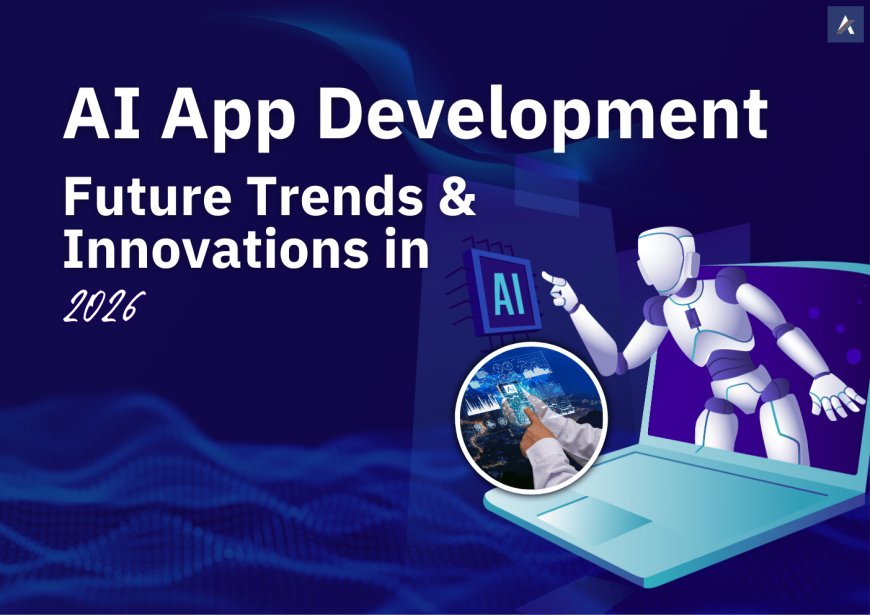
Artificial intelligence is no longer a future discussion. Its a present-day operating reality. By the time 2026 arrives, AI wont simply assist businesses. Itll quietly shape how software is designed, how products are shipped, how creative assets are produced, and how technical teams make decisions at scale.
Among the flood of AI tools gaining attention, three names keep surfacing in very different conversations: Udio AI, Devin, and Jasper.
At first glance, they appear to live in separate worlds.
-
One focuses on music creation.
-
One claims to function as an autonomous software engineer.
-
One has become deeply embedded in content and brand workflows.
Yet, when examined together, these platforms reveal something far more important than their individual capabilities. They highlight where AI software development trends 2026 are heading and what technical leaders need to prepare for the future.
This is not about choosing a single tool. Its about understanding the direction of the ecosystem and how the rules of building, scaling, and maintaining software are being rewritten.
Lets discuss!
Why Udio AI, Devin, and Jasper matter together?
Udio AI, Devin, and Jasper represent three distinct yet interconnected directions in modern AI software development.
Udio AI highlights how creative systems like music and audio generation are becoming programmable components for digital products. Devin reflects on how AI agents are assisting developers in generating complex code and managing development workflows. And, Jasper demonstrates how AI is embedding itself into structured business processes, such as brand management, content creation, and team collaboration.
However, these next-gen AI software tools arent competing with each other. Theyre redefining a different layer of how AI is moving deeper into the future of software development. Heres how:
-
Udio AI shows how AI is becoming a creative system, not just a generator.
-
Devin reflects the rise of AI agents capable of executing multi-step, complex technical workflows.
-
Jasper demonstrates how AI is embedding itself into repetitive business processes.
Together, they signal a shift away from AI as a feature towards AI as an operational layer across software, content, and decision-making. This shift forms the foundation of the most pivotal trends of AI-powered development tools in 2026 and beyond.
What AI software development trends are shaping 2026 and beyond?
As we move into 2026, AI software trends are less about flashy features and more about structural changes. Its all about how systems operate, how teams work, and how value is delivered at scale.
The following trends outline the most important directions product teams, technical leaders, and developers should understand, as the importance of artificial intelligence in software development is growing:
1. AI is evolving from assistive tools to autonomous systems
In its earlier stages of adoption, AI tools were reactive. They all needed prompts to generate outputs, and that was it.
However, its about to change now. By 2026, AI systems will increasingly be capable of:
-
Planning tasks independently.
-
Executing multi-step workflows.
-
Monitoring results and making adjustments without constant human input.
Devins emergence as AI tools for developers clearly highlights this shift. Instead of assisting with isolated tasks, such as code suggestions, AI systems will move toward managing the entire development workflows.
2. Creative AI is becoming the core product infrastructure
Creative AI tools are no longer experimental add-ons.
Tools like Udio AI demonstrate how music, audio, and other creative outputs are becoming programmable components within platforms and applications.
By 2026, creative AI tools will:
-
Be embedded directly into products via APIs.
-
Generate personalized media in real time.
-
Adapt creative outputs based on context and user behavior.
From a software development perspective, this shift will introduce new architectural challenges in scalability, performance, and consistency. Creative systems will increasingly be treated as infrastructure rather than a novelty feature.
3. AI is moving from task execution to workflow ownership
Another major trend redefining AI-driven software development in 2026 is the shift from isolated output to end-to-end process ownership.
Jaspers integration into brand systems and content workflows shows how AI can coordinate repeatable, rules-driven procedures across teams.
In the realm of software development, it means:
-
Documentation and knowledge bases
-
Testing and quality assurance cycles
-
Monitoring, reporting, and optimization workflows
Instead of replacing human roles, AI will increasingly serve as an operational layer that connects tools, data, and teams.
4. Prompt engineering is giving way to AI system design
As AI systems become more autonomous in the future, the value of clever prompts is beginning to diminish. By 2026, the real competitive advantage will lie in:
-
How AI systems are structured
-
How constraints and feedback loops are defined
-
How AI models interact with internal and external systems
Does that mean prompting will end? No, instead theyll become just one small part of a much larger discipline: AI system design. Developers and architects will rather focus on accountability, reliability, and governance as much as output quality.
5. AI fluency is becoming a core software development skill
Understanding how to work with AI tools for rapid development will no longer be optional in the coming days.
By 2026, AI fluency will be a foundational skill across technical roles and responsibilities, including:
-
Knowing when to use AI versus traditional logic
-
Designing hybrid human-AI workflows
-
Evaluating model reliability and risk
With these, AI-driven tools like Jasper and Kevin raise expectations in the coming future. Teams that understand AI in-depth will be better equipped to develop scalable, resilient, and future-ready custom software solutions.
How These Trends Will Change Software Teams and Processes?
Beyond tools and technologies, these future AI software development trends will fundamentally redefine how software teams operate. Development roles will shift more toward:
-
Strategy and system architecture
-
Oversight and validation of AI-driven decisions
-
Continual optimization rather than one-time delivery
Organizations investing early in AI-ready processes, skills development, and governance frameworks will gain a significant advantage as AI is becoming deeply embedded into daily software operations, be it generating code, music, or content.
What this means for the future of AI-driven software development?
The rise of platforms like Udio AI, Devin, and Jasper is more than hype. Its about structural transformation. By 2026, businesses can expect the following:
-
Software will be developed faster, but with greater architectural responsibility.
-
AI will operate across creative, technical, and operational domains.
-
The role of humans will shift towards strategy, oversight, and system design.
The major question for businesses will no longer be whether to adopt AI-powered software tools for 2026 or not. Its about whether theyre preparing for the world where AI is no longer a tool, but a core component of how software is imagined, designed, developed, and evolved.
Wondering where to start? Consider partnering with a professional AI software company like Unified Infotech. With over fifteen years of expertise, they can help you develop AI-driven software solutions that are not only faster but also more adaptive.
Final thoughts on the future of AI-driven software development
As 2026 approaches, AI software development is entering a more integrated and mature era. With tools like Jasper, Udio AI, and Devin showing that artificial intelligence is no longer limited to assisting isolated tasks, the shift is shaping how software is created, operated, and scaled.
The future AI software development trends 2026 are all about helping brands see AI as a system-level capability rather than a standalone tool. By focusing on workflow integration, AI fluency, autonomy, and creative infrastructure, businesses are expected to build software that isnt only faster but also more efficient, more adaptive, and more resilient.
We hope this blog post will give you insights into this. Have more questions? Let us know in the comments.