










The Growing Importance of Data Center Cabling in the Middle East
Examine the specialized cabling requirements—high-density fiber optics, thermal management, and robust power delivery—driving the construction of data centers across the Middle East.

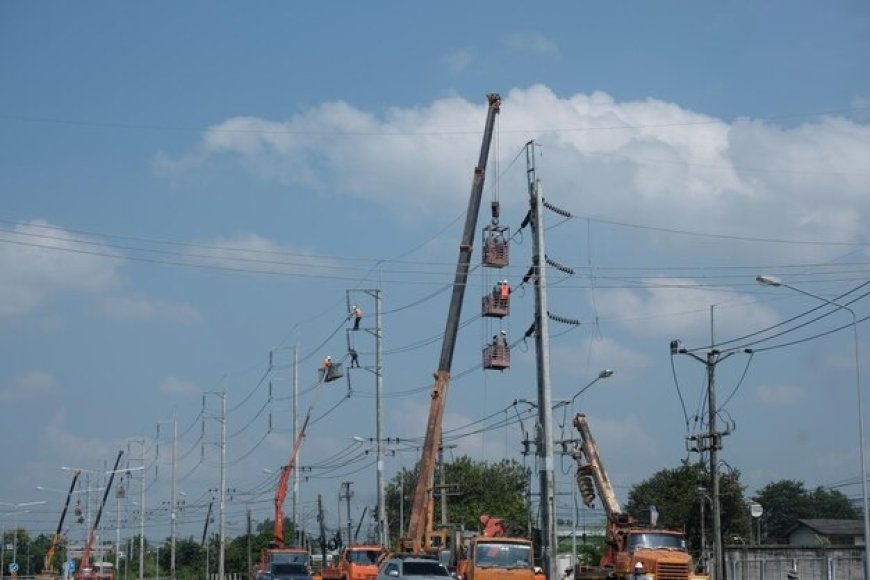
The Middle East is rapidly transforming into a global digital hub. Driven by the mandates of smart cities, digital governance, and regional cloud adoption, the construction of massive data centers across the UAE, Saudi Arabia, and other nations is accelerating. These facilities are the engine of the digital economy, and their success hinges on one critical, often-overlooked element: cabling infrastructure. The sheer volume, speed, and safety requirements of data center cabling demand specialized engineering to address the unique challenges of the region, solidifying the industry's critical role.
1. The Challenge of High Density and Speed
Modern data centers utilize hyper-converged architecture, packing massive computational power into ever-smaller spaces. This density puts intense pressure on cabling.
-
High Fiber Count (HFC): To handle the exponential increase in data transfer (driven by AI and cloud services), data centers rely on ultra-high-density fiber optic cables. These cables contain hundreds of strands of hair-thin glass fiber within a single jacket, maximizing bandwidth while minimizing physical bulk.
-
Low Latency Demands: Cables must maintain perfect signal integrity over short distances to guarantee ultra-low latency, which is essential for financial trading, cloud services, and mission-critical applications.
-
Pre-Terminated Cabling: To speed up deployment and eliminate on-site human error, high-density fiber and copper cables are increasingly being pre-terminated and tested in factory environments before being shipped.
2. Power Delivery in Extreme Environments
Data centers require immense, continuous power, and the regional climate adds thermal stress to the equation.
-
EHV Power Feeds: The massive power demand of a modern data center requires direct connection to the utility grid via high-capacity, Extra-High Voltage EHV) or Medium-Voltage MV) cables. The stability and integrity of these power feeds, often supplied by cable manufacturers in uae, are non-negotiable.
-
Thermal Management: The high ambient temperatures of the Middle East, combined with the heat generated by the servers and power cables, demand superior thermal management. Cables must be designed to withstand high continuous operating temperatures, reducing the strain on the cooling infrastructure.
-
Fire Safety: With high power density, the risk of fire is always present. Data center regulations strictly mandate Low-Smoke, Zero-Halogen LSZH) power cables. This prevents the release of corrosive gases and dense smoke that could harm both personnel and irreplaceable electronic assets during a fire.
3. Cabling's Role in Cooling Efficiency
Cables directly impact the data center's most energy-hungry system: cooling.
-
Airflow Optimization: Improper cable routing blocks airflow, creating hot spots and forcing cooling units to work harder and consume more energy. Smart cable management solutions, using overhead trays and organized pathways, ensure maximum airflow and cooling efficiency.
-
Power over Ethernet PoE) and DC: Utilizing PoE for low-power devices and exploring HVDC for internal power distribution reduces the number of power conversions, minimizing energy loss and the associated heat generated by the power infrastructure.
-
Supply Chain Quality: The integrity of every component is crucial. The materials used must meet stringent thermal standards, which requires continuous verification from quality cable suppliers in uae.
Conclusion: The Digital Artery
Cabling is the digital artery of the Middle East's technological future. Its importance transcends mere connection; it is the fundamental enabler of speed, security, and sustainability for the region's rapidly growing data center ecosystem. By mastering high-density fiber optics, robust EHV power delivery, and fire-safe materials, the cable industry ensures that the digital transformation of the GCC is built on a foundation of flawless performance.
Your Data Center Cabling Questions Answered (FAQs)
-
What is the main reason data centers use so much fiber optic cabling?
Data centers primarily use fiber optics because they offer ultra-high bandwidth and can transmit data over long distances with minimal signal loss. Critically, fiber optics are also immune to Electromagnetic Interference EMI), ensuring flawless data transfer in electrically noisy environments. -
Why do data center cables have to be LSZH?
Data centers use LSZH (Low-Smoke, Zero-Halogen) cables because they house sensitive, irreplaceable electronic equipment. In a fire, LSZH cables prevent the release of corrosive gases that would destroy servers and storage units, and minimize smoke, protecting the facility. -
How does poor cable routing affect cooling in a data center?
Poor routing blocks the controlled airflow paths, creating thermal hot spots within the racks. This prevents cold air from reaching the servers, which increases the average temperature of the data center and forces cooling systems to consume more energy. -
What is a pre-terminated fiber cable, and why is it used?
A pre-terminated cable has the connectors MPO, LC, etc.) installed and tested at the factory. It is used to drastically speed up on-site installation, reduce labor costs, and virtually eliminate errors associated with complex field termination. -
How do the high ambient temperatures in the Middle East affect data center power cables?
The high ambient temperatures reduce the cable's ability to dissipate heat into the environment. This means the cable must be designed with superior thermal management and often requires a higher ampacity rating to ensure safe, continuous operation.