










How Much Investment is Needed to Start a Grocery Franchise in India?
Starting a grocery franchise in India requires an investment of around ₹5 lakhs to ₹30 lakhs, depending on store size, location, and inventory. This guide explains setup costs, licenses, profit potential, and key factors to help you plan a successful grocery business with confidence.
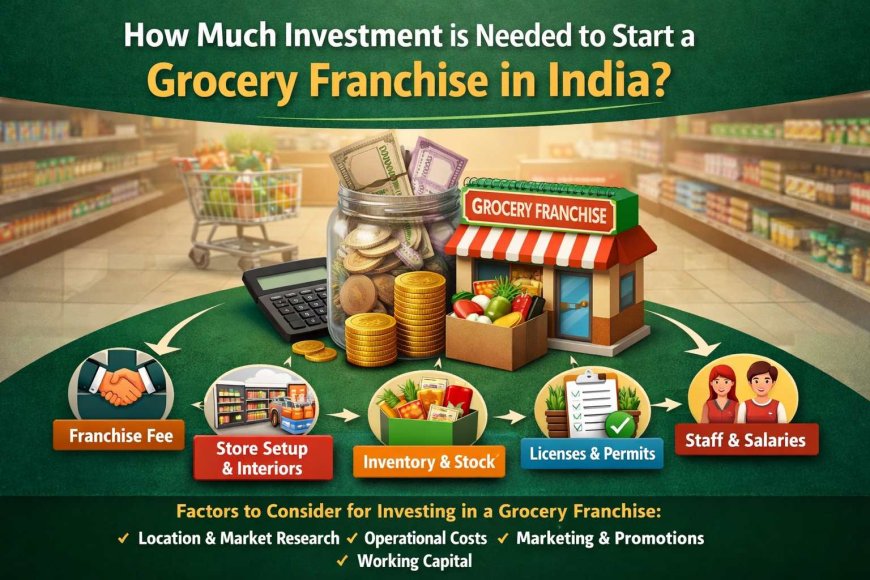
Starting a grocery franchise is one of the most practical business ideas in India today. Daily-use products, repeat customers, and steady demand make this sector attractive for new and experienced entrepreneurs. But the most common question remains: How Much Investment Is Needed to Start a Grocery Franchise in India?
This blog explains the complete investment structure in simple words. You will understand costs, factors affecting investment, expected returns, and practical tipswritten from the perspective of a senior expert with real market understanding.
Understanding the Grocery Franchise Model in India
A Grocery Franchise in India works on a proven retail format. You operate a store under an established system, following set guidelines for layout, product mix, pricing strategy, and operations. This reduces risk compared to starting a grocery store from scratch.
The grocery business franchise model suits:
-
First-time business owners
-
Small investors
-
Family-run businesses
-
Retailers looking to scale
The investment mainly depends on store size, location, and business format.
Complete Investment Guide to Start a Grocery Franchise in India
Basic Investment Range
The total investment to start a Grocery Franchise in India usually ranges between:
?5 lakhs to ?30 lakhs
This wide range exists because different formats need different levels of setup and inventory.
Key Cost Components Explained
1. Franchise Fee
Most grocery franchise models require a one-time franchise fee.
Estimated Cost: ?50,000 ?3 lakhs
This fee covers:
-
Brand usage rights
-
Business training
-
Operational support
-
Setup guidance
Some formats may not charge a franchise fee but adjust margins instead.
2. Store Space & Rental Cost
The store size directly impacts your investment.
|
Store Type |
Approx Area |
|
Small grocery store |
300500 sq ft |
|
Medium store |
6001,000 sq ft |
|
Large format |
1,500+ sq ft |
Rental Cost (Monthly):
-
Tier 2 & 3 cities: ?10,000 ?25,000
-
Tier 1 cities: ?30,000 ?1,00,000
Security deposits are usually equal to 26 months rent.
3. Interior Setup & Store Design
Store interiors affect customer experience and sales.
Includes:
-
Racks & shelves
-
Billing counter
-
Lighting & electrical work
-
Flooring & branding visuals
Estimated Cost:
?1.5 lakhs ?5 lakhs
4. Initial Inventory Cost
Inventory is the biggest investment in a grocery business franchise.
Products include:
-
Food grains & pulses
-
Packaged foods
-
Daily essentials
-
Household items
-
Personal care products
Estimated Cost: ?2 lakhs ?15 lakhs
Inventory cost depends on:
-
Store size
-
Product variety
-
Local demand
5. Equipment & Technology
Modern grocery stores require basic technology.
Includes:
-
Billing software
-
POS system
-
Barcode scanner
-
Weighing machine
-
CCTV cameras
Estimated Cost:
?50,000 ?2 lakhs
6. Licenses & Legal Requirements
Mandatory registrations include:
-
GST registration
-
FSSAI license
-
Trade license
-
Shop & establishment license
Estimated Cost:
?10,000 ?30,000
7. Staff & Operational Expenses
Monthly expenses include:
-
Staff salaries
-
Electricity & maintenance
-
Internet & software
-
Miscellaneous costs
Monthly Cost:
?30,000 ?80,000
Total Investment Breakdown (Summary)
|
Expense Category |
Estimated Cost |
|
Franchise Fee |
?50,000 ?3 lakhs |
|
Store Setup |
?1.5 ?5 lakhs |
|
Inventory |
?2 ?15 lakhs |
|
Equipment |
?50,000 ?2 lakhs |
|
Licenses |
?10,000 ?30,000 |
|
Working Capital |
?1 ?3 lakhs |
Total Investment:?5 lakhs ?30 lakhs
This explains clearly how much investment is needed to start a grocery franchise in India.
Factors That Affect Grocery Franchise Investment
Location
Prime locations increase rent but also boost sales.
Store Size
Larger stores need more inventory and setup cost.
City Type
Tier 1 cities require higher investment than smaller towns.
Product Range
More products mean higher inventory cost.
Business Model
Express stores cost less than supermarket formats.
Expected Profit & Return on Investment
Average Profit Margin
-
8% 15% monthly margin
-
Higher on private-label products
Monthly Revenue Estimate
-
?5 lakhs ?20 lakhs (depending on size and location)
Break-Even Period
-
12 to 24 months
With proper stock planning and customer service, a Grocery Franchise in India can deliver stable long-term income.
Advantages of Starting a Grocery Franchise
-
Low Business Risk : Daily essential products ensure constant demand.
-
Ready Business Model : You avoid trial-and-error mistakes.
-
Easy Operations : Simple supply chain and clear processes.
-
Growing Market : Urbanization and lifestyle changes fuel growth.
Common Mistakes to Avoid
-
Poor Location Selection : Footfall matters more than low rent.
-
Overstocking Slow Products : Focus on fast-moving items.
-
Ignoring Local Preferences : Stock products based on neighborhood demand.
-
Underestimating Working Capital : Always keep emergency funds ready.
Is a Grocery Franchise Right for You?
A Grocery Franchise is ideal if you:
-
Want a stable business
-
Prefer low-risk investment
-
Can manage daily operations
-
Plan for long-term growth
Understanding how much investment is needed to start a grocery franchise in India helps you plan finances wisely and avoid surprises.
Final Thoughts
Starting a grocery franchise in India is a smart business decision when planned correctly. The investment usually falls between ?5 lakhs and ?30 lakhs, depending on location, store size, and inventory level. With consistent demand, repeat customers, and structured operations, a grocery business franchise offers long-term stability and growth. If you are searching for a practical retail opportunity, now is the right time to explore the Grocery Franchise in India market with clear budgeting and realistic expectations.