










Building the Future: A Comprehensive Guide to Structural Design
Design of steel structures

Every skyscraper that pierces the clouds, every bridge that spans a roaring river, and every warehouse that stores our global economy's goods shares a common origin: meticulous structural design. It is the silent science that ensures safety, functionality, and longevity in the built environment. At Integra, we understand that whether you are envisioning a commercial complex or an industrial facility, the integrity of your project rests on the choices made during the earliest design phases.
Structural engineering is often a balancing act between aesthetics, cost, and the physical laws of nature. It requires deep knowledge of materials, loads, and environmental stresses. Two of the most dominant materials in modern construction are reinforced concrete and structural steel. Each brings its own set of strengths, challenges, and ideal applications.
Choosing between concrete and steel isn't just about preference; it's about matching the material's properties to the project's specific demands. Factors like fire resistance, construction speed, span length, and long-term maintenance play critical roles in this decision. In this guide, we will explore the nuances of modern structural engineering, helping you understand the vital considerations that go into creating buildings that stand the test of time.
Design of Concrete Structures: Strength in Versatility
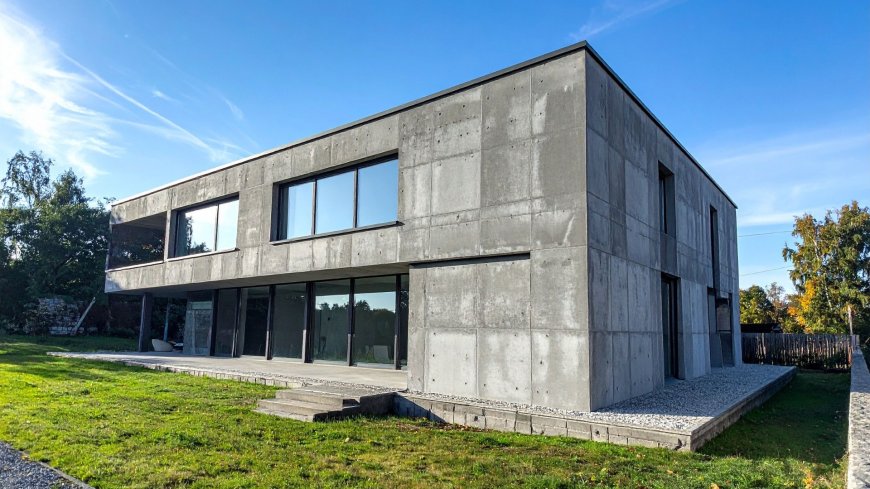
The Design of concrete structures is a cornerstone of civil engineering, renowned for its incredible durability and compressive strength. When we talk about concrete design at Integra, we are usually referring to reinforced concretea composite material where concrete's relatively low tensile strength and ductility are counteracted by the inclusion of reinforcement having higher tensile strength or ductility, typically steel rebar.
Designing with concrete allows for immense architectural freedom. Unlike pre-fabricated steel sections, concrete starts as a liquid, meaning it can be poured into complex, curvilinear forms that would be prohibitively expensive or impossible to achieve with other materials. This plasticity makes it the material of choice for unique architectural expressions, heavy foundations, and structures requiring significant mass, such as dams or retaining walls.
However, the design process is rigorous. Engineers must calculate the loads the structure will beardead loads (the weight of the structure itself), live loads (people and furniture), and environmental loads (wind and seismic activity). In concrete design, particular attention must be paid to "curing" time. Concrete doesn't achieve its full strength immediately; it strengthens over time. Designers must also account for creep (long-term deformation under load) and shrinkage to prevent unsightly or dangerous cracking. Modern advancements, such as pre-stressed and post-tensioned concrete, have further revolutionized this field, allowing for longer spans and thinner slabs, effectively reducing the building's overall weight while maintaining its structural integrity.
The Engineering Behind the Aesthetics
While the material choice is fundamental, the engineering process involves much more than selecting between steel and concrete. It involves a holistic approach to how a building functions.
Load Analysis and Safety Factors
Before a single beam is sized, engineers conduct a comprehensive load analysis. This involves creating a digital model of the structure and subjecting it to various simulated scenarios. What happens if there is a 1-in-50-year storm? How does the building behave during an earthquake?
Safety factors are multipliers applied to these loads to ensure a margin of error. For instance, if a floor is expected to carry 100 tons, it might be designed to carry 150 tons. This buffer accounts for unexpected usage changes, material inconsistencies, or construction imperfections. At Integra, we prioritize rigorous safety analysis to ensure peace of mind for developers and occupants alike.
Sustainability in Structural Design
Modern construction cannot ignore its environmental impact. Both concrete and steel industries are significant contributors to global carbon emissions, but smart design can mitigate this.
- Optimized Material Use: Using advanced software, engineers can optimize the shape and size of structural elements to use the minimum amount of material necessary without compromising safety.
- Recycled Content: Structural steel often contains a high percentage of recycled metal. Concrete mixes can now incorporate industrial byproducts like fly ash or slag to reduce the cement content (the most carbon-intensive part of concrete).
- Life Cycle Assessment: We look at the building's entire life. A structure that lasts 100 years is inherently more sustainable than one that needs replacing in 30 years. Durability is a key component of green building.
Comparative Analysis: Steel vs. Concrete
Deciding between these two giants of construction often comes down to specific project constraints.
Speed of Construction
If time is money, steel often wins. Steel components are fabricated off-site in a controlled factory environment. Once delivered, erection is rapid. Concrete, conversely, requires formwork to be built, reinforcement to be tied, pouring, and then curing time before the next floor can be constructed. However, methods like tilt-up concrete or precast panels are closing this gap.
Fire Resistance
Concrete has inherent fire-resistant properties. It does not burn and conducts heat slowly, protecting the internal steel reinforcement. Structural steel, however, loses strength rapidly when exposed to high temperatures. Therefore, steel buildings require additional fireproofing treatmentssprays, intumescent paints, or claddingwhich add to the cost and construction time.
Cost Implications
The cost battle is fluctuating and depends heavily on local market prices for raw materials and labor. Generally, concrete structures can be cheaper in terms of raw materials but more expensive in labor due to the on-site intensity. Steel has higher material costs but lower labor costs due to faster erection. Integra works closely with clients to perform cost-benefit analyses based on current market conditions.
The Role of Technology in Modern Design
The days of drafting tables and manual calculations are largely behind us. Today, Building Information Modeling (BIM) is the industry standard. BIM allows architects, structural engineers, and MEP (mechanical, electrical, plumbing) engineers to work on a single, 3D model.
This collaboration is crucial. It allows for "clash detection" before construction begins. For example, BIM can reveal if a structural beam is intersecting with a planned HVAC duct. Resolving these issues digitally saves thousands of dollars and weeks of delays on the construction site. Furthermore, advanced analysis software can simulate how structures respond to dynamic loads, such as the rhythmic vibrations of a dance floor or the sudden impact of a blast.
Design of Steel Structures: Precision and Efficiency
The Design of steel structures is driven by precision, high strength-to-weight ratios, and speed. Unlike concrete, steel is isotropic, meaning it has the same strength properties in all directions. This predictability allows engineers to design incredibly efficient skeletons for buildings.
Steel is the material of choice for high-rise buildings and long-span structures like airports or stadiums. Because steel is lighter than concrete relative to its strength, it imposes smaller loads on the foundation, which can result in significant cost savings in groundwork. At Integra, our approach to steel design focuses on optimizing the connectionsthe bolts and welds that hold the building together. These connections are often the most critical and complex parts of the design, dictating how the frame dissipates energy during seismic events.
Furthermore, steel structures offer adaptability. A steel-framed building is easier to modify in the future; beams can be reinforced, and new framing can be added to support different uses. From simple portal frames for warehouses to complex diagrid systems for iconic towers, steel design combines industrial efficiency with structural elegance. It is a discipline that requires exacting standards, as steel members are manufactured to millimetres of tolerance to ensure a perfect fit on site.
Engineering Value for Your Project
At the end of the day, structural design is about creating value. A well-designed building is safer, more durable, and more economical to build and maintain. It enables the architectural vision rather than hindering it.
Whether your project calls for the mass and fire resistance of concrete or the speed and slenderness of steel, the expertise lies in the details. It is found in the optimization of a slab thickness, the detailing of a connection, and the foresight to plan for future adaptability.
At Integra, we are committed to pushing the boundaries of what is possible in structural engineering. We leverage the strengths of both concrete and steel to deliver solutions that are not only structurally sound but also economically viable and environmentally responsible.