










Advanced IoT Functionality Enabled by Embedded Linux Systems
Explore how embedded Linux systems enable advanced IoT functionality with scalability, security, real-time performance, and seamless device integration.

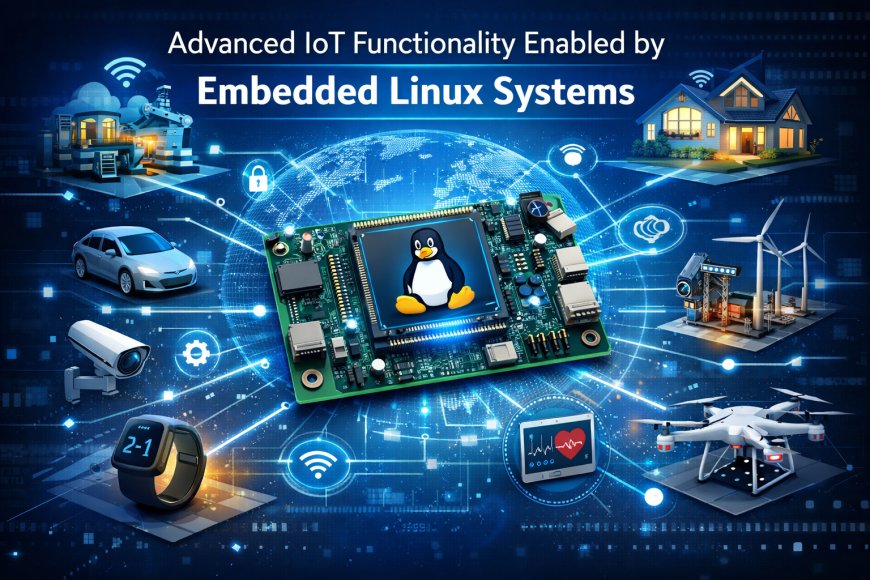
Introduction: The Embedded Linux Edge in IoT
The Internet of Things (IoT) continues to evolve, powering innovations across industriesfrom smart homes and agriculture to manufacturing and healthcare. At the heart of this transformation lies a robust and flexible operating system that helps orchestrate connected devices efficiently: Embedded Linux. Leveraging Embedded Linux Development Services, developers now have access to scalable, secure, and adaptable platforms capable of supporting advanced IoT functionality like edge computing, real-time processing, and seamless cloud integration.
Unlike proprietary firmware, Embedded Linux brings a modular and open-source ecosystem to IoT development, enabling faster deployment cycles and reduced costs. But how does it truly empower smarter, more functional IoT systems?
The Role of Embedded Linux in Enabling Advanced IoT Functions
Modern IoT devices are more than just data collectorsthey are intelligent, responsive systems that must perform complex tasks under constraints like limited power, space, and memory. Embedded Linux stands out in this context due to its lightweight architecture, real-time capabilities, and support for a wide range of hardware.
1. Real-Time Processing and Responsiveness
Many IoT applications require real-time responses. For instance, in industrial automation or autonomous driving, devices need to process sensor inputs and act within milliseconds. Embedded Linux can be tailored with real-time extensions like PREEMPT-RT to ensure low-latency operations, making it ideal for time-sensitive environments.
2. Multi-Layered Security Frameworks
Security remains a top concern in IoT. With growing cyber threats, ensuring secure boot, encrypted communications, and role-based access is critical. Embedded Linux supports hardened kernels, SELinux, and iptables-based firewall configurations, allowing developers to embed advanced security directly into IoT firmware.
3. Efficient Resource Management
IoT nodes often have constrained resources. Embedded Linux supports fine-grained control over memory and processor allocation, enabling optimal use of hardware. Through modular kernel builds and device tree overlays, it ensures minimal bloat and efficient operation.
Scalability and Portability Across IoT Devices
Whether building a simple temperature sensor or a complex smart camera, scalability is vital. Embedded Linux scales well across microprocessors, including ARM, MIPS, and x86 architectures. This flexibility supports the deployment of the same core system across various devices, reducing development time and cost.
Containerization and Virtualization
Advanced IoT solutions often integrate multiple services like data logging, AI inference, and communication protocols. With tools like Docker and LXC supported on Embedded Linux, developers can isolate services for easier updates and better reliability.
Portability Across Platforms
Another strength is platform portability. Embedded Linux-based IoT applications can be migrated across different hardware platforms with minimal changes, allowing businesses to upgrade hardware without rewriting core software.
Smart Device Connectivity and Protocol Support
IoT systems demand versatile connectivityBluetooth, Wi-Fi, Zigbee, LoRa, and more. Embedded Linux supports a wide array of protocols, making it a central hub for connecting diverse sensors and actuators.
Interoperability with Cloud Platforms
IoT data is often pushed to the cloud for visualization or further analysis. Embedded Linux can support MQTT, CoAP, HTTP, and other communication protocols, ensuring seamless integration with popular cloud platforms. This enables real-time monitoring and automated decision-making based on the processed data.
Edge Computing Powered by Embedded Linux
One of the most critical developments in IoT is the shift toward edge computing. Instead of sending all data to centralized servers, IoT devices now process data locally, reducing latency and bandwidth usage.
Embedded Linux plays a pivotal role in this transformation. With the ability to run AI models and real-time analytics at the edge, developers can create smarter IoT applicationsfrom predictive maintenance in factories to intelligent traffic systems in smart cities.
Use Case Example: Smart Agriculture
Consider a smart irrigation system that measures soil moisture, temperature, and weather data. Using Embedded Linux Development Services, developers can deploy an edge-based solution where Linux-enabled nodes analyze the data locally and make decisions without needing constant cloud connectivityensuring reliable performance even in remote areas.
While many systems can support IoT devices, few offer the customization, control, and scalability that Embedded Linux brings to the table. If youre looking to understand more deeply how Embedded Linux fits into IoT infrastructure, check out this in-depth blog on the role of Embedded Linux for IoT systems. It offers valuable insights into the architecture, use cases, and long-term benefits of Linux in connected environments.
Developer Flexibility and Community Support
The strength of any technology lies not just in features but in community and developer tools. Embedded Linux enjoys vast global community support, with thousands of active contributors, documentation sources, and ongoing kernel updates.
Open-Source Tools and Frameworks
The availability of open-source development tools such as Buildroot, Yocto, and OpenWRT enables faster and more customized development. These tools help engineers create minimal and efficient OS images tailored to specific hardware and project requirements.
Debugging and Testing
Embedded Linux also supports advanced debugging, logging, and remote access tools. This facilitates smoother development cycles and easier troubleshooting, especially in large-scale deployments.
Cost-Effectiveness and Long-Term Maintenance
Using Embedded Linux can substantially reduce costs by eliminating licensing fees and enabling code reuse. Its open-source nature ensures that no vendor lock-in occurs, giving businesses full control over their IoT stacks.
Additionally, the long-term maintainability of Embedded Linux systems is a major advantage. With support for kernel upgrades and package management systems like APT or RPM, businesses can maintain, patch, and upgrade their IoT devices remotely and efficiently.
AI and Embedded Linux: A Growing Partnership
Artificial Intelligence (AI) and Machine Learning (ML) are increasingly being pushed to edge devices. Embedded Linux supports lightweight inference engines like TensorFlow Lite, PyTorch Mobile, and ONNX Runtime. This allows devices to make intelligent decisions without constant cloud access.
Real-World Examples
-
Smart Surveillance: Cameras running Linux-based software can detect intrusions using on-device AI.
-
Healthcare Wearables: Monitor patient vitals in real-time and flag anomalies instantly.
-
Retail Analytics: IoT sensors with embedded AI provide insights on footfall, inventory, and customer behavior.
Integration with DevOps and CI/CD Pipelines
In modern IoT projects, DevOps practices are becoming essential. Embedded Linux integrates well with CI/CD pipelines using Git, Jenkins, and other automation tools. This results in faster updates, better collaboration, and easier rollback mechanismsreducing deployment risks.
Final Thoughts: Why Embedded Linux Is the Future of IoT
As IoT ecosystems grow in complexity, the need for a stable, secure, and scalable operating environment becomes increasingly apparent. Embedded Linux provides all of these and more. Its adaptability makes it a natural choice for developing next-generation IoT applications across domains like healthcare, automotive, smart cities, energy, and beyond.
When coupled with expert Embedded Linux Development Services, businesses can unlock new levels of intelligence, responsiveness, and performance in their devicesbuilding the foundation for more connected, autonomous, and data-driven futures.