What is Piling and its types
To transfer the weight of a structure to a deeper, more stable soil or rock layer, the piling technique is used. In this blog post, we will explain what piling is and its types.

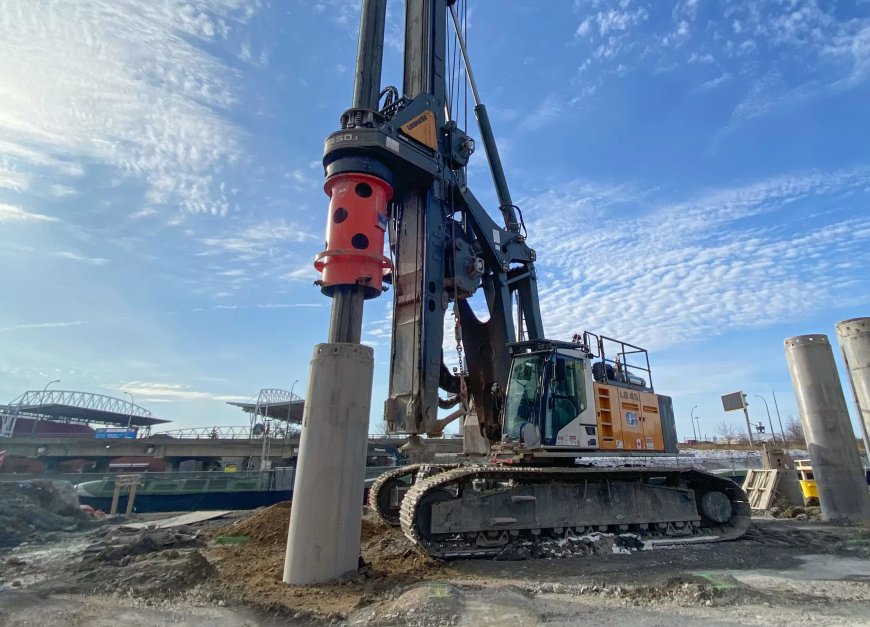
Piles are structural components that transfer the building's load to a deeper level of the soil. Piling is the process of inserting a large number of wood, concrete, or steel into the soil. The large number of insertions of these elements is important for providing a strong foundation for construction.
Piling is important for buildings that are weak or built on soft ground that cant support the building's weight. Lets dive into the importance of piling and why it is essential to construction stability and safety.
Why Piling is Important in Construction?
For any construction, the composition of soil and its condition largely depend on its stability and strength. Different areas have different types of soil; some areas have sandy, loamy, or clay-rich soil. The piling process helps in:
Increase Load-Bearing Capacity: Piles transfer the weight effectively for more massive and taller buildings
Support the foundation: Piles support the base of the building and prevent structural shifts.
Weight distribution: Piles redistribute soil and reduce the impact on the surrounding area.
Types of piling based on construction technique
There are several types of piles, each depending on the different ground conditions and construction requirements. Here are some of its common types:
Driven Piles: Driven piles are manufactured and driven into the ground using drivers and hammers. These are made of wood, steel, and concrete and are best for denser soil.
Bored Piles: Bored piles are filled with concrete, and the process of digging holes is involved. Suitable for locations with minimal vibrance tolerance.
Screw Piles: Screw piles are circular steel sections used as deep foundation piles. These piles are rotated into the ground by using specialized machinery. Suitable for situations where the soil is loose or soft.
Jacked Piles: Hydraulic Jacks are used to install these Jacked piles by pushing the pile into the ground. These piles are used in the area where vibration, noise, and ground settlement need to be minimised.
Types of Piling Based on Their Working Principle
Sheet Piles: Sheet piles are used for soil retention to prevent groundwater from seeping into the construction area. These piles are thin and driven vertically into the ground.
Endbearing Piles: These piles derive their capacity from the rock layer or hard stratum at the bottom of the pile. It transfers the load from the structure through the length of the pile. In this pile, the entire surface works to transfer the load to the soil.
Friction Piles: Cohesion piles, also known as friction piles, are used to create a strong foundation for large, heavy projects such as roads, bridges, and stadiums.
Compaction Piles: These piles are formed by driving material, such as gravel and sand, into the ground; they are also called gravel piles. These are best for bearing the soils load capacity.
Tension Piles: Tension piles are designed to retain uplift forces. These are well known in situations where there is a high risk of the structure being subjected to upward forces, such as in waterlogged, expansive soils and buoyancy.
Displacement Piles: This type of pile displaces soil as the pile shaft is installed. Mostly installed by vibrating, jacking, and driving.
Why should you hire an expert piling contractor
Piling Bristol is important for so many reasons in the construction of the project because it requires a strong base, such as:
Experience and Expertise: Piling Contractors are experienced and knowledgeable about their work. They understand soil conditions, and can test them, use the machinery, and fulfil the load requirements.
Specialised Equipment: Professionals have special equipment, precision, and techniques. They have equipment like drilling machines and piling rigs to ensure they install it properly and pile it according to the design specification.
Quality Assurance: Professionals are responsible for providing high-quality work to avoid problems. They are very detail-oriented and monitor pile integrity to verify alignment and conduct pile load testing.
Proper Pile Installation: They use advanced machinery to precisely perform pile driving. By hiring professionals, there is a lower risk of errors. They follow crucial safety measures and guidelines. They use cost-effective solutions and are experts in their work.
Conclusion:
Piling is by far the most modern technique in construction, transforming weak bases into strong foundations. From construction to bridges, skyscrapers, and stadiums. It not only provides stability and safety, but it also opens new possibilities for construction in challenging environments.
Hiring professionals helps deal with challenging ground conditions and prevent damage to the building. It helps protect the surrounding area and maintain its structural integrity during the construction of new projects.