










How Environmental Regulations Are Driving the Flare Monitoring Market
The Global Flare Monitoring Market size was valued at around USD 1.3 billion in 2023 & is estimated to reach around USD 2.5 billion by 2030.

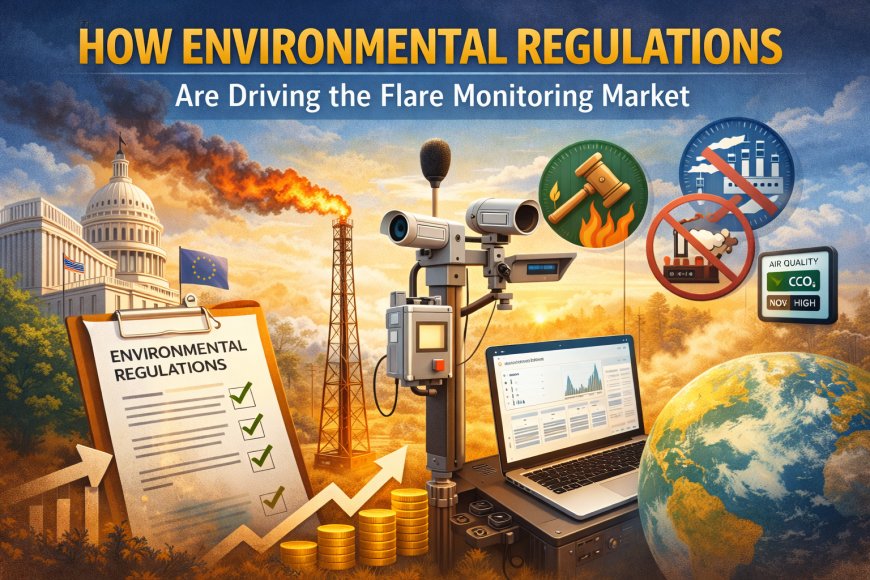
What was once a peripheral concern for heavy industries has now become one of their core operational requirements: environmental compliance. The last ten years have been very different for industries in terms of how they work with flaring operations due to the development and implementation of new, more stringent emission norms and real-time reporting mandates, not to mention greater scrutiny by the public. These changes are having a direct effect on just how environmental regulations, in general, are driving the flare monitoring market to turn systems that were once optional into essential infrastructure.
From refineries to offshore platforms, flare monitoring has become key in ensuring that industries maintain regulatory compliance, operational safety, and even corporate credibility.
Why Flare Monitoring Has Become a Regulatory Priority
Flaring is a necessary safety process within the hydrocarbon industries, but inefficient flaring sends unburned gases, black carbon, and toxic pollutants into the atmosphere. Today, regulators worldwide have come to realize that having flare systems was not good enough but their performance needs to be measured and verified.
Environmental agencies increasingly require operators to:
- Prove combustion efficiency
- Monitor flare flame presence and stability
- Track gas flow and heating value
- Maintain auditable emission records
In real-world plant operations, this has translated into widespread adoption of continuous flare monitoring systems rather than periodic manual inspections.
Flare Monitoring Market Size and Growth Outlook
The globalflare monitoring marketwas valued ataround USD 1.3 billion in 2023and is expected to reachapproximately USD 2.5 billion by 2030, growing at aCAGR of about 10.1% during 20252030. This growth reflects a structural shift rather than a temporary compliance spike. As environmental regulations become more precise and enforcement more data-driven, operators are investing in long-term monitoring solutions that can withstand audits, reduce penalties, and support sustainability reporting.
How Environmental Regulations Are Driving the Flare Monitoring Market
The regulations concerning the environment are no longer restricted to the setting of emission limits but now relate to the measurement of emissions, and this means flares must show efficient burning of the gases they release.
In terms of installation, I can assert that the problem isn't setting up flare systems, but rather being able to prove they are working as expected. In order for refineries to satisfy regulatory requirements, there is now infrared imaging, gas analysis, and real-time diagnostic capabilities such as those offered by flare monitoring systems.
This is one of the major driving forces behind the impact of environmental regulations in propelling the market for flare monitoring worldwide.
Role of Corporate Responsibility and Public Scrutiny
Beyond formal regulations, companies are facing increased pressure from investors, communities, and environmental groups. Public access to emissions data has changed expectations. Operators are now expected to:
- Quantify flaring events
- Reduce visible emissions
- Demonstrate proactive environmental management
Flare monitoring systems provide the data backbone for these commitments. Many organizations now integrate flare data into ESG dashboards, sustainability reports, and internal performance metrics. This shift has made monitoring systems a strategic asset rather than a compliance expense.
Key End-Use Industries Driving Demand
Refineries remain the largest adopters of flare monitoring systems due to their high flaring frequency and strict emission oversight. Monitoring data is often used not only for compliance but also for process optimization and waste reduction.
Gas processing plants and offshore installations face additional scrutiny due to safety risks and environmental sensitivity. Flare monitoring is essential for ensuring safe gas disposal during pressure relief events while meeting offshore emission standards.
Although flaring is less frequent, heavy manufacturing facilities increasingly use flare systems for byproduct gas management. As regulations extend beyond oil & gas, monitoring adoption is expanding across industrial sectors.
Regional Regulatory Influence on Market Growth
North America currently leads the market due to well-established emission standards and active enforcement by environmental agencies. The U.S. and Canada require detailed flare efficiency documentation, driving demand for advanced monitoring technologies.
Europe follows closely, supported by aggressive climate targets and strict industrial emission directives. Meanwhile, Asia-Pacific and the Middle East are emerging growth regions as governments tighten oversight of expanding industrial infrastructure.
Emerging Trend: Data-Centric Compliance Models
A notable trend is the shift from hardware-only monitoring todata-driven compliance ecosystems. Cloud connectivity, centralized dashboards, and automated reporting are becoming standard. Facilities can now demonstrate compliance remotely, respond to audits faster, and benchmark performance across sites.
This evolution reinforces how environmental regulations are driving the flare monitoring market toward smarter, integrated solutions rather than standalone devices.
Final Perspective
Flare monitoring has moved far beyond its original role as a safety check. Today, it sits at the intersection of environmental responsibility, regulatory compliance, and operational efficiency. As regulations continue to tighten and transparency becomes non-negotiable, flare monitoring systems will remain a critical investment for industrial operators worldwide.